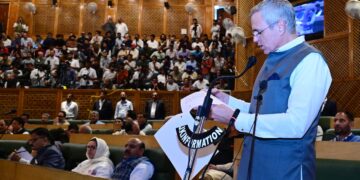
Jammu, Feb 10: Veteran politician and Speaker of the Jammu & Kashmir Legislative Assembly, Abdul Rahim Rather on Tuesday said that poets and writers should come forward to preserve the multilingual ethos of Jammu and Kashmir.
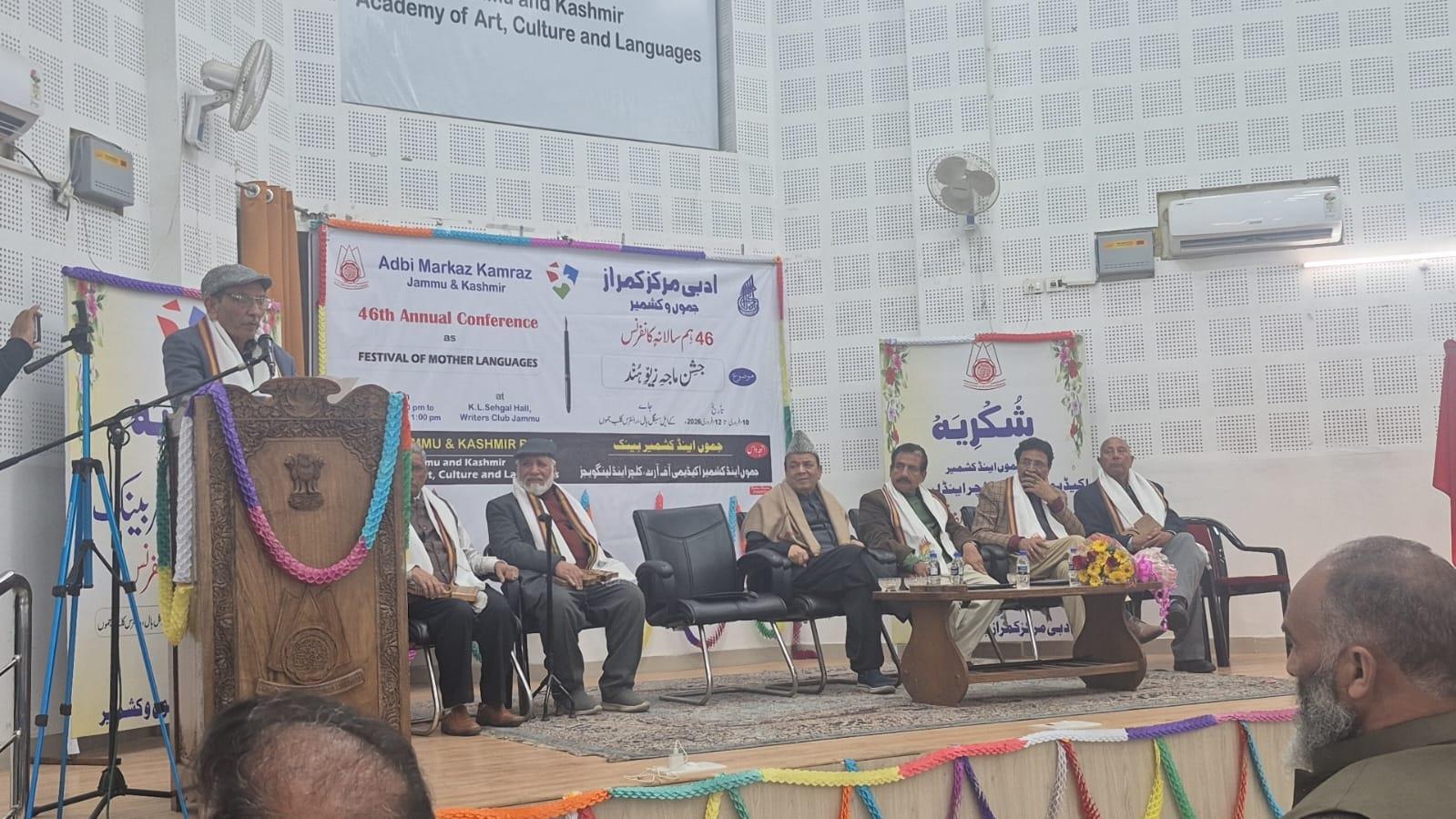
He said this while inaugurating the 46th three-day Annual Literary Conference of Adbi Markaz Jammu & Kashmir (AMK) in Jammu.
Rather, per news agency—Kashmir News Observer (KNO), hailed Adbi Markaz Kamraz for its efforts in bringing together representatives of different regional languages on a single platform. He said the organisation deserves appreciation for hosting conferences aimed at uniting linguistic communities.
“Jammu and Kashmir is home to diverse languages, and people take pride in this multilingual ethos,” he said, highlighting the significant role poets and writers have played — and continue to play — in sustaining this cultural plurality.
He added that felicitating genuine and quality writers not only strengthens literature but also inspires younger generations to remain connected with tradition and fosters unity through shared literary identities.
The conference was organised under the theme “Festival of Mother Languages.” Vice-President AMK, Shakir Shafi, conducted the proceedings of the session, while General Secretary Shabnum Tilgami presented the organisation’s annual report.
In his welcome address, President Adbi Markaz Kamraz J&K stated that language and literature create bonds among people of diverse identities and lead humanity towards a higher sense of unity. He expressed concern over the erosion of cultural and civilisational bonds and emphasised the need to revive them.
He described the conference as an initiative in that direction and invited all stakeholders to participate in preserving the ethos of Kashmir and Kashmiriyat.
Expressing concern over the growing disconnect between the younger generation and their cultural identity, he urged collective efforts to reconnect youth with the linguistic and cultural heritage of Jammu and Kashmir.
He further noted that all regional languages in the Union Territory — including Gojri, Dogri, Pahari, and Punjabi — face common challenges, and their representatives must work together to safeguard their linguistic and cultural heritage. He also extended gratitude to all participants.
Delivering his presidential address, Sahitya Akademi Convener (New Delhi) Shad Ramzan highlighted the historical depth of the Kashmiri language and its prospects for being granted classical status.
He reiterated the demand for recognition of Kashmiri as a classical language, noting its long literary tradition and rich corpus of literature that meet the necessary criteria.
“Our language deserves classical status, and this demand should reach all government forums,” he said, presenting historical and scholarly details supporting the claim.
Poets and writers representing various regional languages were felicitated during the event, including Aseer Kashtiwari (Kashmiri), Vijay Verma (Dogri), Javid Rahi (Gojri), K. D. Manni (Pahari), Khalid Hussain (Punjabi), and Prem Nath Shad (Kashmiri)—(KNO)