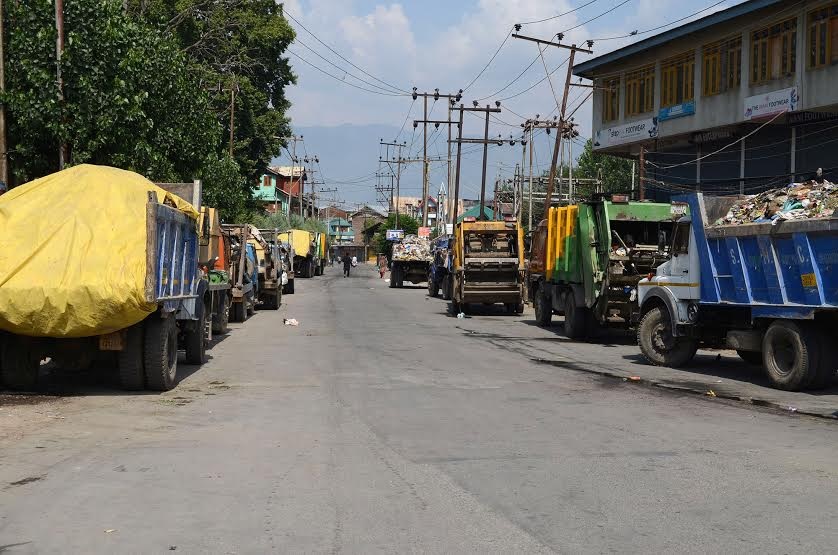
Srinagar, May 25: As part of Eid-ul-Azha sanitation preparedness exercise, the Srinagar Municipal Corporation (SMC) on Monday said they have mobilised an extensive network of men, machinery and transport vehicles across all 35 municipal wards to ensure swift collection and disposal of sacrificial animal waste across the city.
An official of SMC said that at least 186 drivers and operators, along with a large fleet of hopper vehicles, tippers and waste carriers, will be deployed ward-wise for the Eid sanitation drive.
He said the special operation will begin on second day of Eid-ul-Azha—May 28. The field staff and transport wings have been directed to remain on high alert to avoid the accumulation of animal waste in public places.
The official said dedicated hopper services and mobile collection units will operate across major city areas, including Downtown Srinagar, Lal Chowk, Hazratbal, Batamaloo, Bemina, Chanapora, Pantha Chowk, Khanyar, Nowshera, Safa Kadal, Eidgah outskirts and uptown localities.
He said the corporation has already put “men and machinery on toes” and all departments concerned have been instructed to ensure zero-delay response during Eid days.
“Comprehensive arrangements have been made for the scientific disposal of sacrificial waste. Hopper vehicles, transport carriers, loaders and sanitation teams are being kept ready from the second day of Eid. Emergency manpower has also been kept on standby,” the official said.
The official added that control mechanisms have been established ward-wise and residents can directly contact designated drivers and field teams for lifting of hides, skins and sacrificial waste.
According to the official deployment list, accessed by KNO, multiple vehicles and drivers have been earmarked for each ward to ensure uninterrupted collection services in densely populated areas.
The SMC has appealed to people not to dump animal waste along roadsides, water bodies, open spaces or drains and instead cooperate with sanitation workers for maintaining hygiene during the festival.
“Public cooperation is equally important. Citizens should use the free collection service and avoid mixing sacrificial waste with routine household garbage,” the official said—(KNO)