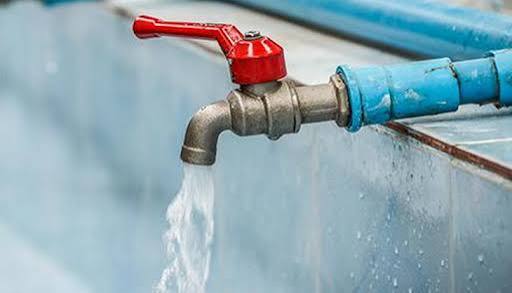
Srinagar, Jul 23: The Centre on Thursday informed Parliament that 81.26 per cent of rural households in Jammu and Kashmir have been provided Functional Household Tap Connections (FHTCs) under the Jal Jeevan Mission (JJM), with more than 9.89 lakh new tap water connections added in the Union Territory since the launch of the scheme in August 2019.
Replying to a starred question in the Lok Sabha, Union Jal Shakti Minister C.R. Patil said Jammu and Kashmir has 19.25 lakh rural households, of which 5.75 lakh households (29.90 per cent) had tap water connections when the mission was launched on August 15, 2019. As of July 18, 2026, the number has increased to 15.64 lakh households (81.26 per cent) after providing tap water supply to 9.89 lakh additional rural households.
The minister informed the House that across the country, around 15.89 crore rural households, accounting for 82.09 per cent of the total rural households, have tap water connections as on July 18, 2026, compared to 3.23 crore households (16.71 per cent) at the launch of the mission.
The Centre said the government has approved the extension of the Jal Jeevan Mission up to December 2028 under JJM 2.0, with the total financial outlay enhanced from Rs 3.60 lakh crore to Rs 8.69 lakh crore. “The central share has been increased from Rs 2.08 lakh crore to Rs 3.59 lakh crore, with the revamped mission focusing on structural reforms in the rural drinking water sector, water quality monitoring and community participation,” it said.
The ministry said an independent third-party functionality assessment conducted in 2024 found that 98.1 per cent of surveyed households had tap water connections, 87 per cent received water during the previous week, 84 per cent received water as per schedule, 80 per cent received at least 55 litres per capita per day (LPCD), while 76 per cent of household tap connections were found to be fully functional after assessing quantity, quality and regularity of supply.
The government said implementation of JJM is being monitored through a multi-level mechanism, including the JJM Integrated Management Information System (IMIS), online dashboards, third-party inspections, geo-tagging of assets, sensor-based monitoring, district dashboards and strengthened community participation to ensure timely and sustainable rural water supply—(KNO)