• About
  • Shop
  • Forum
  • Contact
No Result
View All Result
e-Paper
Kashmir Thunder - Latest News, Breaking News
Saturday, November 7, 2026
  • HOME
  • News
    • Top Headlines
    • Local
    • National
    • World
  • Business
  • Science & Tech
  • Education
  • Health
  • Opinion
    • Editorial
    • Feature
    • Review
  • Sports
    • Cricket
    • Football
    • Others
  • EPAPER
  • HOME
  • News
    • Top Headlines
    • Local
    • National
    • World
  • Business
  • Science & Tech
  • Education
  • Health
  • Opinion
    • Editorial
    • Feature
    • Review
  • Sports
    • Cricket
    • Football
    • Others
  • EPAPER
No Result
View All Result
Kashmir Thunder - Latest News, Breaking News
No Result
View All Result
  • HOME
  • News
  • Business
  • Science & Tech
  • Education
  • Health
  • Opinion
  • Sports
  • EPAPER

Kashmir’s water bodies losing carrying capacity: Experts

by Jahangeer Ganaie
July 26, 2026
Reading Time: 2 mins read
Kashmir’s water bodies losing carrying capacity: Experts
Share on FacebookShare on TwitterWhatsapp

Say encroachments, garbage dumping, urbanisation undoing post-2014 flood mitigation efforts

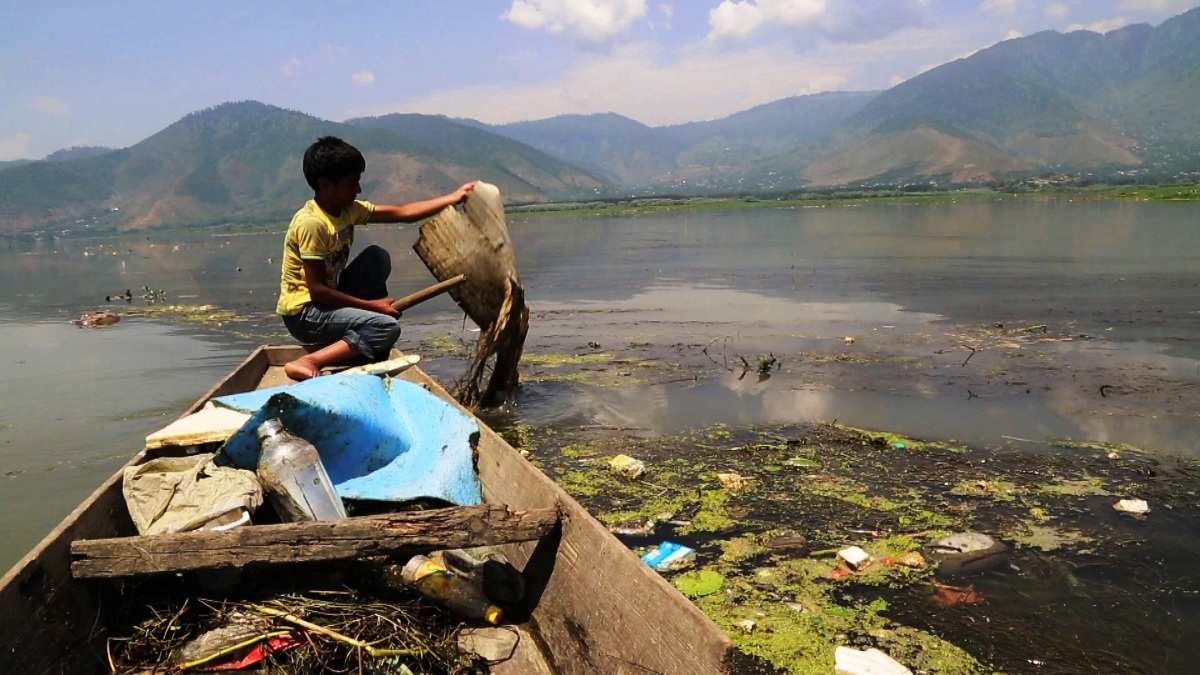
Srinagar, Jul 25 (KNO): Nearly 12 years after the devastating 2014 floods exposed the vulnerability of Kashmir’s flood management system, experts have raised concerns over the declining carrying capacity of the Valley’s rivers, streams, and wetlands, warning that rampant encroachments, indiscriminate garbage dumping, and unchecked urbanisation are undoing much of the progress made under the flood mitigation programme.

Environmental experts and officials told the news agency—Kashmir News Observer (KNO) that instead of improving, the carrying capacity of almost every major water body in Kashmir is steadily decreasing, making the region increasingly vulnerable to flooding during heavy rainfall. The problem is not confined to the River Jhelum alone but extends to almost all rivers, streams, canals, and wetlands across the Valley.

Mudasir Ahmad, an environmental science lecturer in south Kashmir, said that under the Flood Management Plan sanctioned through the Prime Minister’s Development Package (PMDP), the government’s long-term objective was to enhance the carrying capacity of River Jhelum from around 40,000 cusecs under Phase-I to 60,000 cusecs under Phase-II. However, he said there is little public information about the current status and progress of the second phase.

Senior officials from the Irrigation and Flood Control Department told KNO that Phase-I primarily focused on spot dredging and channel improvement at vulnerable stretches, with ₹399 crore sanctioned under the PMDP. The objective of Phase-II is to further enhance the carrying capacity to 60,000 cusecs. Notably, the Central Water and Power Research Station (CWPRS) Pune had recommended extending the flood spill channel to Wular Lake with a uniform bed width of 80 metres and widening the Jhelum in north Kashmir by 40 metres for around 19 kilometres.

Dr Umar, Assistant Professor of Environmental Sciences in Srinagar, said that illegal encroachments have become common along riverbanks, while many households discharge wastewater and sewage directly into streams and rivers.

An official of the Jammu and Kashmir Pollution Control Board said rapid urbanisation and encroachment along the Jhelum have resulted in the discharge of tonnes of untreated solid and liquid waste from residential areas, degrading water quality and affecting the river’s aquatic ecosystem.

Officials said major towns including Anantnag, Bijbehara, Awantipora, Pampore, and Srinagar have witnessed extensive urban expansion along the river, leading to widespread encroachment and direct discharge of untreated waste.

A research paper titled “Massive land system changes impact water quality of the Jhelum in Kashmir Himalayas,” authored by Prof. Shakil Ahmad Romshoo and his colleagues, found a substantial deterioration in the river’s water quality between 1983 and 2016. Nitrate-nitrogen concentration in the river increased from 185 µg/L to 672 µg/L, an increase of nearly 260 per cent, primarily due to urbanisation, forest degradation, excessive use of pesticides and fertilisers, and increasing human interference.

Experts said that unless encroachments are removed, waste disposal into water bodies is strictly regulated, and scientific restoration measures are implemented on priority, Kashmir’s rivers and wetlands will continue to lose their carrying capacity, increasing the risk of urban flooding and environmental degradation in the years ahead. (KNO)

Previous Post

Rs 2022 crore flood management projects for Kashmir stuck amid technical disagreements, infrastructure risks

Next Post

After 6-day halt, Amarnath Yatra resumes

Jahangeer Ganaie

Jahangeer Ganaie

READ MORE

Kashmir’s rich historical, literary heritage receives international recognition

by Jahangeer Ganaie
November 7, 2026
Kashmir’s rich historical, literary heritage receives international recognition

Kalhana’s Rajatarangini enters UNESCO Memory of the World register UNESCO inscription proud moment: LG Sinha Inclusion matter of pride for J&K: CM Omar Srinagar, Nov 06: Kashmir’s rich historical and literary heritage...

Read moreDetails

Kashmir’s rich historical, literary heritage receives international recognition

by Jahangeer Ganaie
November 7, 2026
Kashmir’s rich historical, literary heritage receives international recognition

Kalhana’s Rajatarangini enters UNESCO Memory of the World register UNESCO inscription proud moment: LG Sinha Inclusion matter of pride for J&K: CM Omar  Srinagar, Nov 06: Kashmir’s rich historical and literary heritage...

Read moreDetails

Dissenting MLAs, NC top brass inch closer to reconciliation

by Jahangeer Ganaie
November 7, 2026
Dissenting MLAs, NC top brass inch closer to reconciliation

After meeting CM Omar, Dr. Farooq, legislators say some demands would be addressed immediately Srinagar, Nov 06: The dissenting MLAs of the National Conference appeared to have moved closer to reconciliation with...

Read moreDetails

J&K, Ladakh overdraw power 57 times

by Jahangeer Ganaie
November 7, 2026
J&K, Ladakh overdraw power 57 times

Central dispatchers report repeated violations of grid discipline by UT Srinagar, Nov 06: Unauthorized power ‘overdrawal’ by Jammu & Kashmir and Ladakh has raised serious grid security concerns in the region, with...

Read moreDetails

Dry weather likely till Nov 9, rain, snowfall from 10: MeT

by Jahangeer Ganaie
November 7, 2026
Dry weather likely till Nov 9, rain, snowfall from 10: MeT

Jammu hottest at 29°C, Gulmarg coldest at 0°C minimum Srinagar, Nov 06: The Meteorological Centre Srinagar on Friday forecast generally dry weather across Jammu and Kashmir till November 9, while light rain...

Read moreDetails

Kashmir maps 30,000 Chinar trees in digital conservation drive

by Jahangeer Ganaie
November 7, 2026
Kashmir maps 30,000 Chinar trees in digital conservation drive

QR-enabled identification plates installed on 13,500 prominent trees Srinagar, Nov 06: Jammu and Kashmir has geo-tagged nearly 30,000 Chinar trees and created a digital database to document the iconic species, marking a...

Read moreDetails

=== Terror recruitment case === CIK raids multiple locations across Kashmir

by Jahangeer Ganaie
November 7, 2026
=== Terror recruitment case ===  CIK raids multiple locations across Kashmir

Srinagar, Nov 06: The Counter Intelligence Kashmir (CIK) wing of Jammu and Kashmir Police on Friday carried out searches at around 10 locations across the Valley in connection with a terror recruitment...

Read moreDetails

Leave a Reply Cancel reply

Your email address will not be published. Required fields are marked *

© 2025 Kashmir Thunder - Designed by K.Web.

No Result
View All Result
  • HOME
  • News
    • Top Headlines
    • Local
    • National
    • World
  • Business
  • Science & Tech
  • Education
  • Health
  • Opinion
    • Editorial
    • Feature
    • Review
  • Sports
    • Cricket
    • Football
    • Others
  • EPAPER

© 2025 Kashmir Thunder - Designed by K.Web.