
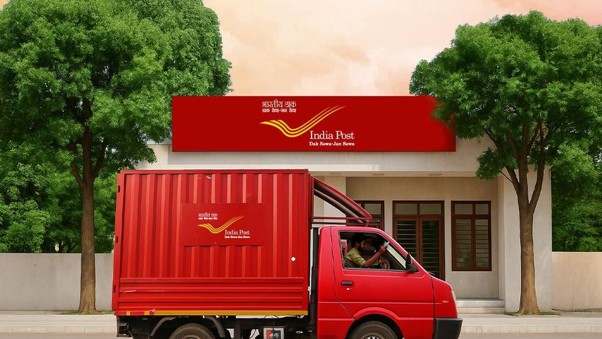
The functioning of post offices in India has silently undergone significant transformations over the last couple of years
The functioning of post offices in India has silently undergone significant transformations over the last couple of years. One notable change which is intriguing the public is the merger of the historic Registered Post service into Speed Post, alongside the rollout of two premium, time-definite offerings – “24 Speed Post” and “48 Speed Post” – across six major metropolitan cities, Delhi, Mumbai, Chennai, Kolkata, Bengaluru, and Hyderabad.
When India Post first introduced Speed Post on 1 August 1986, the service was confined to a restricted booking and delivery network operating on an assured D+2 (Day of Posting + 2 days) standard. However, by the first decade of the 21st century, as post offices were integrated into a Wide Area Network (WAN), Speed Post booking and delivery became nearly universal. Around the same time, real-time tracking became the global industry norm, prompting India Post to introduce tracking features for Registered Post as well. This technological parity erased the qualitative differences between Registered Post and Speed Post, leading to their eventual consolidation. Geographic Reference
Today, while standard Speed Post is considered to be a universal service which can be availed anywhere in India, 24 Speed Post and 48 Speed Post operate as premium, guaranteed alternatives within a dedicated network. The concept of Registered Post – which guarantees addressee-specific delivery as opposed to standard, address-specific Speed Post – now survives exclusively as a value-added feature under the Speed Post framework. South Asians & Diaspora
Old-timers may recall that a little more than three decades ago, India Post introduced the ‘Metro Channel’ – a mail delivery service that guaranteed next-day delivery for ordinary household mail between six major metropolitan cities. Postcards, inland letters, and envelopes dropped into the blue-coloured street letterboxes in the morning were delivered at their destinations the following morning, while those posted after the cut-off hours arrived the next afternoon. The newly launched ‘24 Speed Post’ appears to be a reincarnation of that classic Metro Channel.
The primary difference is that users must now pay a premium – though it remains much cheaper compared to the major private couriers (for retail users) – in exchange for a secured, money-back guarantee if the post office fails to meet its deadline. For this premium service, deliveries are fulfilled even on Sundays and public holidays, protected by secure OTP verification. This enhanced security and holiday distribution have truly become the new threshold for industry standards nationwide. Enhanced security for self-booking, transit, and delivery has been made possible through a major digital transformation initiative launched by the Department of Posts in 2025, known as Advanced Postal Technology (India Post IT 2.0).
Backed by an investment of Rs 5,785 crore, the system replaced legacy infrastructure with an indigenously developed, cloud-native architecture hosted on the government’s Megh Raj 2.0 Cloud platform. The new technology integrates dynamic QR code scanning to allow users to pay for postal services seamlessly via UPI. It enables retail and bulk customers to handle self-booking, select available time slots for pick-up, and complete digital payments. Customers can download and print generated shipping labels directly onto their packages, keeping them ready for pick-up by the designated Beat Postman.
Automated SMS notifications are triggered at every milestone – from pick-up to sorting, dispatch, subsequent handling at sorting hubs and transit points, right up to final delivery. In spite of India Post’s strides to strengthen its technological infrastructure, there is hardly any indication of market share of Speed Post rising up. The organisation’s financial health over the years indicates no improvement. Private commercial giants like DHL Express, FedEx and UPS command the high-value time definite global express market. India Post is yet to make any dent in that segment.
The post office network of Dak Ghar Niryat Kendras (Export Post Offices) primarily target MSMEs needing cost-effective, non-time-critical global parcel shipping. India Post recently introduced DIGIPIN, a 10-character alphanumeric digital postal index number. Based on latitude and longitude coordinates, DIGIPIN divides the country into a uniform 4×4-metre grid and identifies exact digital address for every physical location of the country. This infrastructure facilitates precise last-mile delivery within vast complexes like shipping ports, major railway stations, airports, and warehouse hubs.
Consequently, it significantly streamlines operations for logistics service providers and e-commerce platforms. However, the long-term effectiveness of DIGIPIN hinges on India Post’s capability to educate and drive user adoption. To date, no visible public awareness campaigns have been seen to promote this initiative, or otherwise DIGIPIN could be an effective tool in House-listing in the current Census operations. Can DIGIPIN be a source of earning for India Post? The answer is ‘No’.
The geo-coded addressing system developed by a government department for public use can’t be monopolised under copyright law. Some countries earlier developed a digital addressing system similar to India’s DIGIPIN. However, India Post’s DIGIPIN is unique because it is an entirely public, open sourced and native geospatial network. Google Maps is not open sourced; though publicly accessible for anyone to use via web-browsers and mobile apps, it’s a proprietary item owned by Google. DIGIPIN lays the foundation for accurate parcel drops at designated spots laying the critical groundwork for autonomous drone deliveries in future.
Regarding the financial health of India Post, a notable highlight is the recent turnaround of India Post Payments Bank (IPPB) – a fully owned public sector undertaking set up under the Department of Posts in 2018. IPPB has recorded a net profit of Rs 134 crore. This may appear to be a paltry sum, but it is important that the bank has made the turnaround by leveraging the vast network of 1.65 lakh post offices to enable low-cost customer acquisition and high transaction volumes in rural areas.
Recognized for leading the industry in doorstep, bio-authenticated rural withdrawals, the IPPB generated its primary revenue by routing central and state government subsidy disbursements direct to the account of the beneficiaries, which currently average Rs 45,000 crore annually. The synergy of IPPB and post office can go a long way in strengthening rural financial infrastructure of the nation, not directly measurable in terms of profitability.
The writer is a former civil servant, and an independent commentator on socio-economic issues and public policies. Courtesy: The Statesman