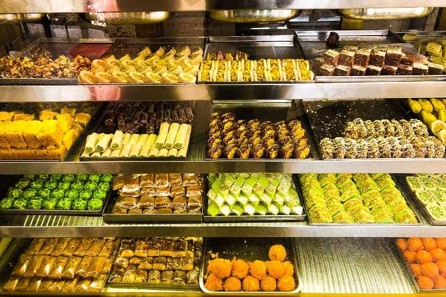
With the onset of Navratris, the demand for milk, paneer, desi ghee and sweets increases manifold for two months. Taking advantage of this demand, unscrupulous elements get lured into milk adulteration with an intention to earn easy bucks—and the probability of adulterated milk and milk products reaching Jammu from Punjab, Haryana, Delhi and Uttar Pradesh increases manifold. Here comes the job of J&KFDA and the JMC.
With the onset of Navratris, the festival season starts in Jammu, and the demand for milk, paneer, desi ghee, and sweets increases manifold for the next two months. A major chunk of the Kashmiri population also shifts to Jammu during the four months of the winter season starting from November. Taking advantage of the increased demand for milk, paneer, desi ghee, khoya, and sweets during these months, unscrupulous elements get lured into indulging in milk adulteration with the intention of earning easy money. Even the probability of adulterated milk and milk products reaching Jammu from states like Punjab, Haryana, Delhi, and Uttar Pradesh in heavy milk supplies increases manifold. Here comes the job of J&KFDA and the JMC to launch a massive crackdown on such dairies and milk suppliers selling adulterated milk and milk products, as well as checking each consignment of milk and milk products crossing Lakhanpur borders, with full record of traceability and destination.
J&K produced about 29.73 lakh metric tonnes of milk in 2024–25, up from 28.74 lakh MT in 2023–24 and 28.17 lakh MT in 2022–23. Yet the government has acknowledged a demand–supply gap, setting a target of raising production to 43 lakh tonnes by 2030. Until then, the Union Territory has no other option but to continue to depend on milk, paneer, cheese, khoya, ghee, and milk powder sourced largely from Punjab, Haryana, Delhi, and other states.
That dependence is not inherently unsafe. The concern is whether every consignment entering J&K—particularly during the festival rush—can be traced from source to retail counter, sampled where necessary, and tested quickly enough to keep unsafe stock out of the market. The milk adulteration in North Indian states is an organised crime syndicate. There have been instances when authorities found small factories manufacturing adulterated milk using harmful ingredients like urea, detergent powder, starch, animal fats, glucose, neutralisers, and other non-milk substances. To much surprise, these organised syndicates make huge supplies of such fake milk and adulterated cheese in the markets, under the nose of enforcement agencies. Reports come from these states where adulterated or fake cheese is supplied in the market at around ₹200 per kg, and local authorities have failed to check such supplies. Only in a few instances have authorities been able to seal such factories and arrest the culprits. In the absence of strict penalties in the FSSAI framework—such as rigorous imprisonment for two to ten years, imposition of huge fines, and sealing of property in the name of the culprits—milk adulteration with harmful ingredients becomes a very alluring business for criminal-minded persons.
In October 2026, Maharashtra’s FDA identified 37 accused in an alleged milk-adulteration network and arrested and charge-sheeted 25; laboratory tests reportedly found detergent and industrial chemicals in milk samples. In the same month, food-safety officials in Etah, Uttar Pradesh, raided a dairy and seized about 10 quintals of suspected adulterated paneer, one quintal of ghee, cream, soybean, skimmed-milk powder, and edible oils.
For J&K, Lakhanpur is a critical surveillance point. There are apprehensions that dairy consignments linked to adulteration networks elsewhere may enter the Union Territory during the festival season. That concern demands a factual response: consignment-level records, sampling at entry points, and rapid laboratory testing.
The FDA and the JMC Health Officer must maintain strict, year-round vigil over all milk dairies, collection centres, chilling units, processed milk plants, paneer and khoya units, sweet manufacturers, and ghee processors operating within J&K. During the festival season, inspections should be frequent, unannounced, and risk-based. Food Safety Officers should conduct surprise checks at dairy premises, verify procurement and sales records, inspect hygiene and cold-chain conditions, and lift samples of raw milk, processed milk, paneer, cheese, khoya, ghee, and sweets without prior notice. The objective must be deterrent enforcement. Dairy owners and processed milk unit operators should know that adulteration, dilution, use of non-milk fats or solids, poor hygiene, and false labelling will invite immediate sampling, laboratory testing, seizure, prosecution, and public disclosure.
In August 2025, enforcement teams in the Jammu division seized 440 quintals of substandard rasgulla and 8.2 quintals of paneer found unfit for human consumption. In September 2026, police in Jammu seized 20 bags of suspected adulterated paneer from a bus.
The ghee record is particularly troubling. In August 2026, the J&K FDA prohibited the sale, storage, distribution, and display of 10 specified batches of ghee after laboratory testing found quality violations, including indicators of foreign vegetable fat. The affected batches were sold under names including Dairy Mohan, Apna Dairy Milk, Milk Bite, Nandni, Shahi Taj, Daawat Fresh, Nand Krishna, Vandu, Dairy Milk, and Mohan Dairy. Weeks later, the FDA prohibited four more affected ghee batches—Milk Bite, Pehalwan, Swift, and Sangath—after tests indicated vegetable or foreign fat. Repeated detection of foreign fat in ghee marketed as pure desi ghee is a serious warning about weaknesses in the dairy chain.
The FDA’s 2025 record shows activity but also a transparency gap. During a dedicated ghee drive in late 2025, officials seized 80.78 kg of stock; of 41 samples tested, 12 failed quality standards, leading to prohibition orders against manufacturers. The FDA also reported more than 13,000 inspections during 2025. Yet the public still lacks a consolidated, district-wise account of milk, paneer, cheese, khoya, ghee, and sweet samples lifted during October, November, and December 2025—the core festival months. Consumers do not know how many samples were tested, how many failed, how many cases were filed, which firms or shop owners were prosecuted, or what penalties and convictions followed.
The FDA should publicise this information for October to December 2025 and the current festival period, through newspapers and other media, regularly: total samples lifted, failed samples, cases registered, names of major violators, and the status of prosecutions, seizures, fines, and convictions. Enforcement that disappears from public view allows unsafe supply chains to return quietly in the next season.
Repeated exposure to urea, detergents, unsafe dyes, and chemical preservatives can burden the kidneys and liver, disturb digestion, and contribute to long-term organ stress. Adulterated ghee, often based on vegetable or animal fats, can worsen lipid profiles and increase stress on the liver and kidneys.
The FDA should treat dairy safety as a continuous public-health system rather than a seasonal drive. It must maintain a register of every milk and milk-product consignment entering J&K, recording the supplier, transporter, vehicle number, origin, invoice, batch number, quantity, destination, sample lifted, and laboratory result. At Lakhanpur and other transit points, samples of high-risk products—loose milk, paneer, cheese, khoya, ghee, and sweets—should be lifted routinely, with rapid testing so suspect stock does not remain in circulation while reports are awaited. Milk-powder consignments require equal scrutiny: importer, brand, batch, FSSAI licence, invoice, intended use, and laboratory result should be verifiable.
During a festival season built around milk, sweets, and ghee, J&K’s food-safety machinery must demonstrate that traceability, surprise enforcement, and accountability are stronger than the profit motive of those who adulterate.
The writer is an Environmental Advocate, Policy Writer, and Convenor of ‘We The Humans Forum for Nature and Mankind’, a public charitable trust. He can be reached at [email protected]