Press Information Bureau
Nari Shakti at the Heart of Viksit Bharat
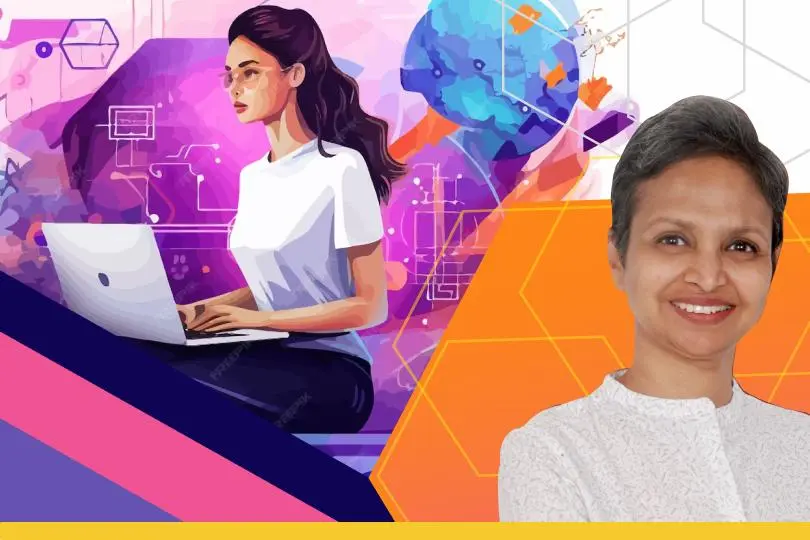
Imagine a nation where every woman, from rural artisan to urban innovator, steps into the workforce not as a participant, but as a powerhouse driving economic transformation. This is the promise of Viksit Bharat, that envisions a developed India by 2047, centring women’s economic inclusion and empowering them through education, skills, safety, and entrepreneurship to unleash Nari Shakti for national growth.
One of the key pillars of achieving Viksit Bharat is ensuring at least 70 percent workforce participation by women, making them equal stakeholders in India’s growth story.
Advancing Women’s Workforce Participation
India has witnessed a remarkable increase in the female workforce participation rate. Women employment rate nearly doubled between 2017-18 to 2023-24. Data from The Ministry of Labour and Employment states that female Labour Force Participation Rate (LFPR) increased from 23.3% in 2017-18 to 41.7% in 2023-24.
Worker Population Ratio (WPR) for women aged 15 years and above rose from 22% in 2017-18 to 40.3% in 2023-24, LFPR increased from 23.3% to 41.7%.
More recently, Female WPR rose to 32.0% in August 2025 from 31.6% in July 2025 and 30.2% in June 2025 and Female LFPR increased to 33.7% in August 2025 from 33.3% in July 2025 and 32.0% in June 2025.
Besides, latest EPFO payroll data highlights a growing trend of formal employment among women. During 2024–25, 26.9 lakh net female subscribers were added to EPFO. In July 2025, ~2.80 lakh new female subscribers joined and the net female payroll addition stood at ~4.42 lakh, asserting today’s more inclusive and diverse workforce.
India’s Rise in Women’s Workforce Participation Across BRICS
Over the past decade, India has recorded the most significant rise in women’s labour force participation among the BRICS nations, according to World Bank Data. Between 2015 and 2024, India’s female labour force participation rate has surged, with a growth of over 23%. In contrast, Brazil, China, and Russia experienced either stagnation or slight declines, while South Africa posted only modest gains.
This upward trajectory reflects India’s rapid transformation in women’s economic inclusion, driven by targeted policy initiatives that expand access to skills, credit, and formal employment.
The country’s decade-long momentum positions it as a model of inclusive growth within BRICS, demonstrating that sustained policy focus can transform women’s economic empowerment into a national growth driver.
Legal Framework for Women’s Workplace Empowerment
Labour laws in India cover a wide range of provisions aimed at regulating employment and ensuring the protection and welfare of women workers. A summary of the key legal safeguards and entitlements for women employees is provided below:
Maternity Benefit Act, 1961 (Amended 2017)
The Maternity Benefit Act, 1961, which provides maternity benefits to women employees, was amended in 2017 that extends maternity leave from 12 to 26 weeks. In addition to granting maternity leave, the Act mandates that employers with 50 or more employees must establish and maintain a crèche within the workplace. This crèche is intended to cater to the needs of children, ensuring a convenient way for working mothers to leave their children in a safe space during working hours. Now the act also includes provisions for surrogate mothers, aiming to support and promote women’s participation in the workforce.
According to the BRICS Women’s Development Report 2025, India stands out for its generous paid maternity leave provisions, offering 182 days—the second longest in the group, behind only Iran’s 270 days. This exceeds durations in other BRICS nations, such as Brazil, South Africa, and Ethiopia (120 days each), Egypt and Indonesia (90 days each), and the UAE (60 days). The report emphasises India’s position as a leader in fostering family-friendly workplaces to enhance women’s retention and participation.
Sexual Harassment of Women at Workplace Act, 2013
The Sexual Harassment of Women at Workplace (Prevention, Prohibition, and Redressal) Act, 2013, plays a pivotal role in fostering a safe and secure working environment by actively preventing and addressing instances of sexual harassment in the workplace, indirectly enhancing women’s participation in the workforce.
One of its key provisions is the mandatory creation of Internal Complaints Committees (ICCs) within organisations, which are responsible for addressing complaints related to sexual harassment and ensuring a fair and confidential redressal process.
The ICC comprises both internal and external members, including a presiding officer, representatives from among employees, and a member from a non- governmental organization or association committed to women’s rights.The Act outlines the procedures and timeframes for the resolution of complaints, promoting a workplace culture that prioritises the dignity and well-being of women employees.
The POSH act also requires district administrations to constitute a Local Complaints Committee (LCC) in each district to focus on cases where the complaints are lodged against the employer themselves or in organisations with less than 10 employees where an Internal Complaints Committee (ICC) is not constituted.
Equal Remuneration Act, 1976
This Act, is a significant legislation designed to eliminate gender-based wage discrimination and emphasises the principle of equal pay for equal work, ensuring women receive the same remuneration for identical or similar work. The Act promotes fairness, non-discrimination, and equal opportunities for both male and female workers, fostering a more equitable work environment.
According to the BRICS Women’s Development Report 2025, India ranks 120th globally in gender pay equity (2024 data), closely mirroring peers like Brazil (118th), Iran (114th), and South Africa (113th), while trailing behind China (14th) and UAE (10th). Note that the higher the ranking, the better the situation of equal pay for men and women. This positioning underscores India’s progress in bridging pay gap.
Code on Social Security, 2020
This Code, strengthens protections for women by extending maternity, health, and social security benefits to all categories of workers, including those in the unorganised and platform sectors.
The Code also emphasises inclusivity across all sectors of employment under the Employees’ State Insurance Scheme, notably extending its benefits to plantation workers. This provision is particularly beneficial for women engaged in tea and coffee plantations, providing them with essential support and ensuring their well-being.
The Occupational Safety, Health, and Working Conditions Code, 2020
This Code incorporates specific provisions to address the occupational safety, health, and welfare of workers including women. It emphasises a secure and healthy working environment, with attention to women’s unique health needs and mandates free annual health checkups for all workers. This Code allows women to work night shifts with their consent, provided employers ensure their safety. It also requires employers to offer transportation for women working at night, reinforcing protection for female employees across work settings.
The law also mandates that employers ensure adequate safety measures for women in hazardous occupations and provide crèche facilities for children under the age of six in establishments with over fifty workers, as prescribed by the Government.
Workplace Inclusivity in Government Sector
The Government has undertaken various women-centric initiatives to promote inclusivity in the workplace, workplace wellness and holistic wellbeing of female employees in Government service. These, measures, among other things include:
Empowering Women through Skills and Employment
A range of employment and skill development initiatives have been launched by the Government across Ministries to enhance women’s participation in the workforce, equipping them with market-relevant skills, entrepreneurial opportunities, and pathways to economic independence.
Empowering women through skills and employment initiatives has been a key focus of the government, with various schemes launched across different ministries to enhance women’s participation in the workforce. These initiatives aim to equip women with market-relevant skills, promote entrepreneurial opportunities, and pave pathways toward economic independence.
One such scheme is the Pradhan Mantri Kaushal Vikas Yojana (PMKVY), managed by the Ministry of Skill Development and Entrepreneurship (MSDE). This program enables youth to undertake industry-relevant skill training, with approximately 45% of the candidates being women, thus fostering greater female participation in skill-based employment.
The Pradhan Mantri Mudra Yojana (PMMY), overseen by the Ministry of Finance, focuses on funding micro-enterprises and small businesses that are often led by women. Notably, over 68% of the account holders under this scheme are women, contributing significantly to the growth of women-led enterprises across India.
Similarly, the Stand-Up India scheme aims to empower SC, ST, and women entrepreneurs, with over 2.01 lakh women-owned accounts as of March 2025. This initiative helps facilitate financial inclusion and entrepreneurial development among marginalized women.
The Start Up India program, managed by the Ministry of Commerce and Industry, supports innovation and startup growth nationwide. It has successfully fostered over 75,000 women-led startups, encouraging female entrepreneurs to contribute to the country’s economic dynamism.
In the STEM (Science, Technology, Engineering, and Mathematics) fields, the WISE-KIRAN initiative by the Department of Science and Technology focuses on increasing women’s participation at various career stages, promoting gender diversity in these critical sectors.
Finally, the NAVYA program—collaboratively managed by the Ministry of Women and Child Development and the Ministry of Skill Development and Entrepreneurship—targets girls aged 16 to 18. It provides training in emerging sectors such as digital marketing and cybersecurity, along with modules on hygiene, conflict management, communication skills, workplace safety, and financial literacy, thereby supporting holistic development and employment readiness for young women.
Enabling Ecosystems for Working Women
SHe-Box (MWCD)
The Ministry of Women and Child Development launched the SHe-Box portal, an online system designed to help in better implementation of various provisions of ‘The Sexual Harassment of Women at Workplace (Prevention, Prohibition, and Redressal) Act, 2013’ (SH Act). This Act mandates the appropriate Government to monitor its implementation and maintain data on the number of cases filed and disposed of.
The SHe-Box portal provides a publicly available centralised repository of information related to Internal Committees (ICs) and Local Committees (LCs) constituted at various workplaces, whether in government or private sector, and also an end-to-end integrated complaint monitoring system. It provides for designating a nodal officer for every workplace who is required to ensure updating of data/ information on a regular basis for real time monitoring of complaints.
Mission Shakti
The Ministry of Women and Child Development implemented ‘Mission Shakti’ on April 01, 2024 which aims at strengthening interventions for women safety, security and empowerment. The objective of this Mission is to provide to all women and girls including differently-abled, socially and economically marginalised and vulnerable groups, who are in need of care and protection, with short term and long-term services and information for their holistic development and empowerment.
The Mission Shakti has two verticals ‘Sambal’ and ‘Samarthya’.
Sambal (Safety & Security)
One Stop Centres (OSC): Provide integrated support to women facing violence through medical aid, legal assistance, psychological counselling, and shelter services under one roof.
Women Helpline (181-WHL): A 24/7 toll-free service connecting women to emergency response systems (police, fire, ambulance) and One Stop Centres.
Beti Bachao Beti Padhao (BBBP): Aims to ensure survival, protection, education and empowerment of the girl child.
Nari Adalat: Offers a community-level grievance redressal platform at Gram Panchayat level to address issues such as harassment, denial of rights, and petty disputes.
Samarthya (Empowerment & Rehabilitation)
Shakti Sadan: An Integrated Relief and Rehabilitation Home for women in distressful situations including trafficked women.
Pradhan Mantri Matru Vandana Yojana (PMMVY): Provides financial compensation for loss of wages due to pregnancy and childbirth, now extended to the second child if it is a girl, promoting gender equity.
Sakhi Niwas: Ensures safe, affordable accommodation and day-care facilities for working and aspiring women.
Palna: Expands access to quality crèche facilities through Anganwadi centres, offering childcare for children under six in a safe, nurturing environment.
SANKALP: Hub for Empowerment of Women (HEW): Bridges information gaps about government schemes, assists women in availing benefits, and acts as a project monitoring unit for Mission Shakti initiatives.
Conclusion
Over the last decade, India is witnessing an unprecedented transformation in women’s workforce participation. With landmark reforms, expanding skill development, enhanced maternity and childcare benefits, and initiatives like Mission Shakti, the Government has created a strong foundation for inclusive and supportive workplaces.
The steady rise in women joining the labour force, the surge in women-led enterprises, and the mainstreaming of gender-sensitive policies signal a new era where Nari Shakti is powering the nation’s growth. From village entrepreneurs to corporate leaders, women are increasingly shaping India’s economic and social landscape.
As India moves towards the vision of a Viksit Bharat@2047, the empowerment of women at work is not just a priority—it is a defining force of national progress. By ensuring safe, equitable, and opportunity-rich workplaces, the country is unlocking the potential of half its population, laying the path for a stronger, more inclusive, and globally competitive India.