DC stresses enforcement, rehab measures
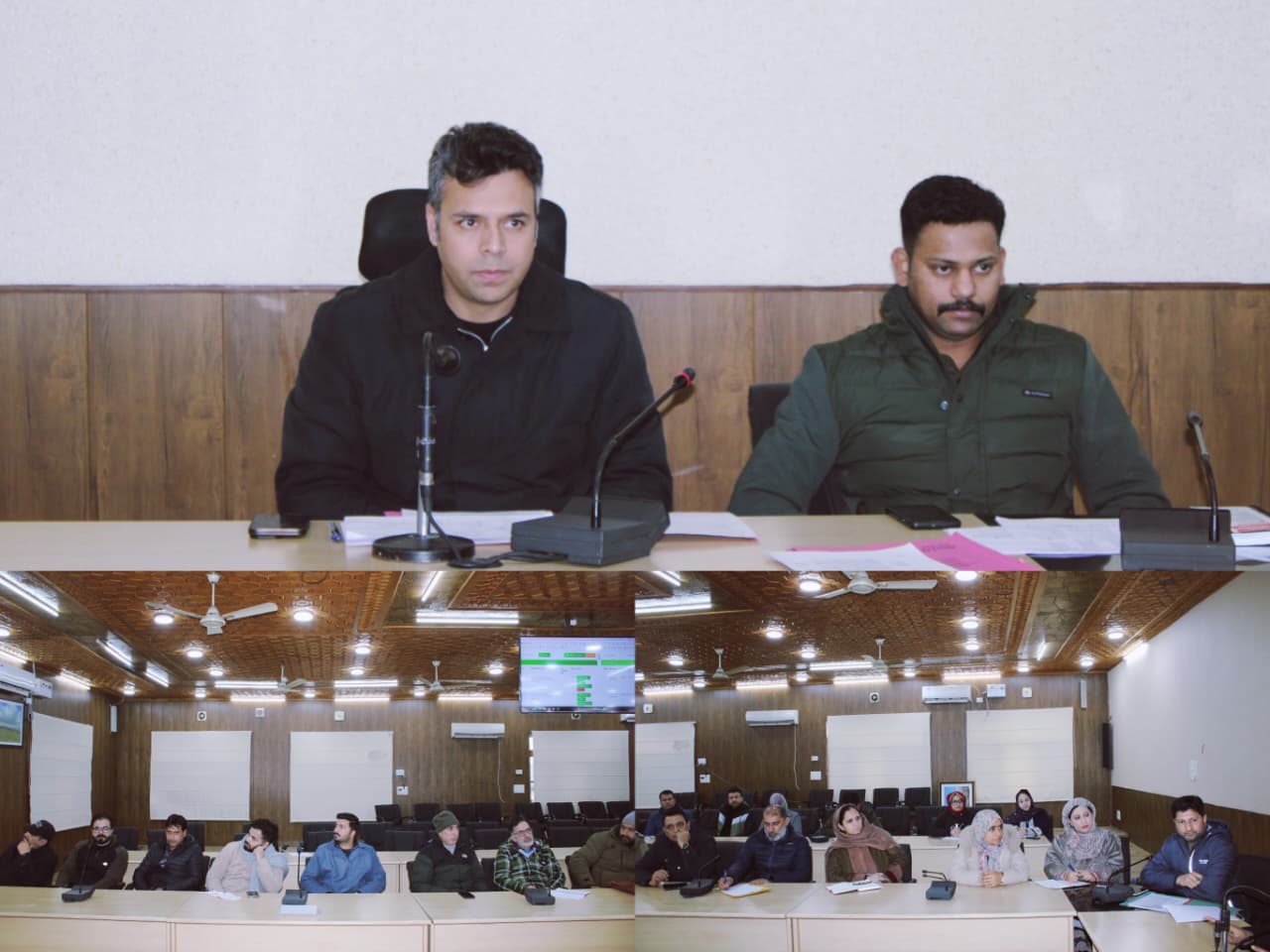
BUDGAM, NOVEMBER 30: The 42nd District-Level NCORD (Narco Coordination) Committee Meeting was Tuesday convened at the DC Office Budgam under the chairmanship of Deputy Commissioner Dr. Bilal Mohi-ud-Din Bhat, along with SSP Budgam Nikhil Borkar to review ongoing measures against drug abuse and to formulate fresh strategies for achieving a drug-free Budgam.
The meeting, as per an official statement, was attended by ADC Budgam, all SDMs, ACD, CMO, DSWO, Medical Superintendent DH Budgam, Principals of all Government Degree Colleges, Executive Officers of Municipal Committees, and other concerned officers.
At the outset, the action taken on previous NCORD decisions was reviewed. It was informed that 192 kanals of land have been reclaimed and made agriculturally viable by the Agriculture Department through the destruction of wild cannabis during the last three years.
The chair was also apprised that 58 cases have been registered under the NDPS Act, 17 detentions made under PIT-NDPS, and 83 persons arrested so far in the district.
Addressing the meeting, the DC said that drug abuse is not merely a law-and-order issue but a grave social challenge impacting families, youth and the overall fabric of society.
He emphasised that the administration will adopt a strict, zero-tolerance approach towards drug peddlers, traffickers and cultivators, while simultaneously ensuring care, treatment and rehabilitation for victims of addiction.
The DC stressed that a multi-pronged strategy encompassing enforcement, deterrence, treatment, rehabilitation and mass awareness is indispensable to effectively combat the menace. He directed all line departments to intensify coordinated action against narcotics cultivation and peddling, adding that roadsides, embankments, forest fringes and Panchayat areas must be kept completely free of cannabis and poppy cultivation.
While appreciating the progress achieved so far, the DC remarked that continuous, visible and proactive enforcement is essential to sustain public confidence and deter offenders. He further stated that community participation and timely intelligence sharing are critical pillars in breaking the drug supply chain.
On regulation of drugs, the DC underscored the need for 100 percent CCTV coverage and Computerised Billing Systems (CBS) in all chemist shops. It was informed that Budgam has 630 retail and 225 wholesale chemist outlets, all under strict monitoring. The DC directed that regular inspections must continue and stringent action be taken against any violations. He further instructed the Drug Inspector to ensure wide publicity of enforcement actions, including cancellation of licences, to promote transparency and deterrence.
It was informed that 72 calls have been received on the Tele-MANAS mental health helpline, reflecting its growing role in providing psychological support. The DC directed that such facilities be widely publicised to enable people to seek confidential and timely assistance.
The DC directed the Excise Department to work in close coordination with Revenue and Police authorities for destruction of illicit crops and prompt registration of FIRs.
SDMs were asked to engage religious scholars and community leaders to encourage sermons against substance abuse and promote the concept of “Nasha-Mukt Panchayats.”
The meeting was informed that the Rural Development Department shall organise special Gram Sabhas focusing on drug abuse awareness, while the DSWO shall conduct large-scale IEC campaigns across villages, towns and educational institutions.
The chair was apprised by ARTO budgam that 18 licenses of the drivers involved in narcotic drug trafficking have been suspended in the district.
The DC directed that the Addiction Treatment Facility (ATF) at District Hospital Budgam must remain functional round-the-clock, and noted that the Drug De-Addiction Centre is now fully ready for intake of patients requiring treatment and rehabilitation.
He also instructed that all Government Degree Colleges in the district ensure installation of CCTV cameras within campuses to strengthen preventive monitoring.
Reiterating the administration’s zero-tolerance policy, the DC stated that Budgam must emerge as a model district by dismantling drug networks and safeguarding the future of its youth through collective action. He stressed that this mission requires active involvement of government departments, civil society, parents, teachers, religious scholars and community elders.
He added that a holistic, community-driven and sustained approach is the only way to permanently eradicate the drug menace from the district.
On the occasion, SSP Budgam urged concerned officers to ensure installation of CCTV cameras at identified hotspots including Nasrullapora Budgam, Chadoora and Magam. He also emphasised strong inter-agency coordination and focused rehabilitation and counselling of drug-affected persons at the District Drug De-Addiction Centre.