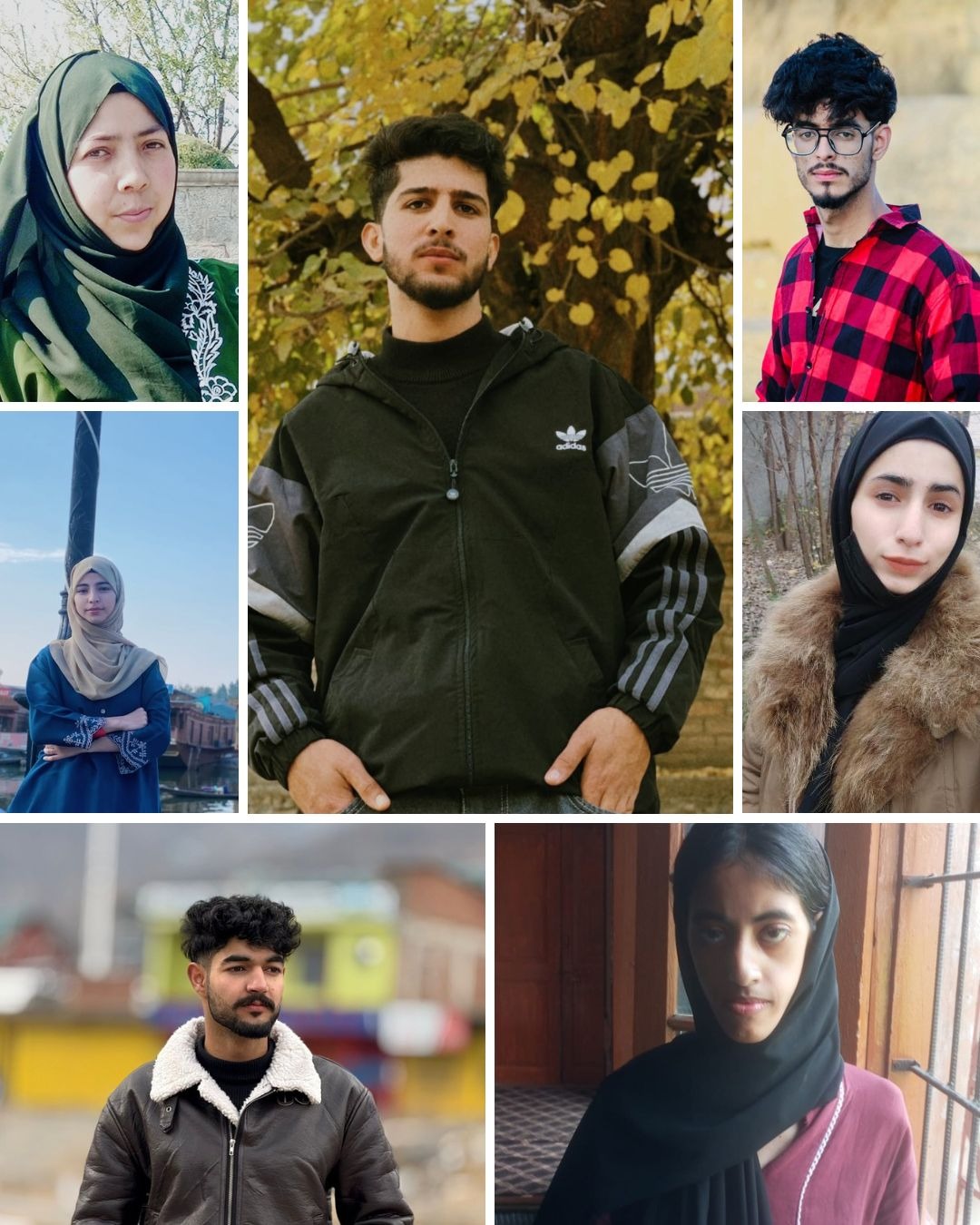
Srinagar, Jan 15: In an inspiring demonstration of resilience and determination, seven specially-abled students of Abhinandan Home, Rambagh, here, have cleared the Class 12 examinations with distinction, marking yet another proud moment for the institution dedicated to the education of children with disabilities.
All seven students, who are hearing and speech impaired or visually challenged, secured excellent marks, proving that physical limitations are no barrier to academic excellence when the right support system is in place. The achievement has been widely hailed by educators, parents and social activists as a testament to inclusive and specialised education.
Principal of Abhinandan Home, Mudasir Ahmad, said that the school appeared in the Class 12 examinations with seven students this year and every one of them passed with flying colours.
“This is only the second time in the institution’s history that such an outstanding result has been recorded at the senior secondary level. For these children, Abhinandan Home was not just a school but their only hope,” he said.
Ahmad added that over the years, hundreds of specially-abled students from the institution have successfully completed their Class 12 education. “Many of our students have gone on to live independent and dignified lives despite immense challenges,” he added.
The successful candidates include Tanzeela, who scored 454 marks; Abid with 453; Seerat with 450; Mohammad Umaq with 438; Burhan with 418; Muskan with 419; and Towheeda with 415 marks.
Sharing their journey, the students said that most of them had initially enrolled in regular schools but were forced to leave due to communication barriers, lack of understanding from peers and teachers, and the absence of appropriate learning tools.
“We struggled a lot in normal schools. It was only after joining Abhinandan Home that we truly felt understood and supported,” they said.
The availability of Braille textbooks, large-print study material, sign-language-based teaching, and specially trained teachers played a crucial role in our academic success, the students said.
“A specially-abled student has to work twice as hard as others. Our success belongs as much to our parents and teachers as to us,” they said.
Family members of Abid, who is hearing and speech impaired said that if this institution did not exist, our son might never have been able to continue his studies and this school changed his life.
Tanzeela, who is visually impaired, echoed similar sentiments, saying that crossing the Class 12 milestone would not have been possible without the tireless efforts of her teachers and the unwavering support of her parents.
“Our teachers believed in us even when society doubted our abilities,” she said.
The students said their message to others living with disabilities is clear and firm.
“We believe in making disability our strength, not our weakness. We want to show so-called ‘normal’ people that we can compete with them on equal footing,” they said, urging students who had dropped out due to disability to rejoin education through special schools.
However, amid the celebrations, a serious concern continues to trouble these achievers. The students pointed out that their academic journey now faces uncertainty due to the absence of separate or adequately inclusive college-level institutions for specially-abled students in Jammu and Kashmir.
“Once again, we are at a crossroads. There is no dedicated college for students like us, and we will be forced to join regular colleges that may not have the infrastructure or trained staff to support our needs,” one of the students said.
“We fear that the lack of facilities at the higher education level may hinder our progress,” they added.
Students collectively appealed to the government to take immediate steps to establish separate colleges for specially-abled students or, at the very least, create fully inclusive and well-equipped sections within existing colleges.
“Education should not stop at school. We request the authorities to intervene at the earliest so that students with disabilities are not pushed back into dependency after coming this far,” they said—(KNO)