
‘Deficient snowfall may affect paddy nursery preparation this season’
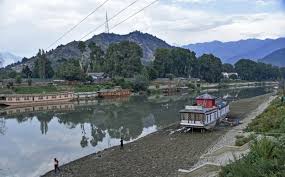
Srinagar, Mar 05: The water level in Jhelum River has dropped below the zero-gauge mark in the first week of March, an unusual development that experts say could signal stress for Kashmir’s upcoming paddy cultivation season.
According to official flood control data, the river was flowing at minus 0.86 feet at Sangam in south Kashmir at 9 am on Thursday, indicating discharge below the zero level — a rare occurrence for this time of the year.
Faizan Arif, an independent weather forecaster who runs ‘Kashmir Weather’, said the low-level points to deficient winter precipitation and poor snow accumulation in the higher reaches.
“Early March usually sees better flow due to gradual snowmelt. This year, despite warm spells in February, the rise in water level was brief and weak,” Arif told the news agency—Kashmir News Observer (KNO). “Historically, such temperature spikes would push the river up by several feet. That response was missing.”
He said temperatures in February remained above normal on several occasions, at times crossing the average by a significant margin. While the warmth triggered some melt, the limited snowpack meant there was little sustained discharge into the river system.
Agriculture experts and farmers expressed concern that if the trend continues, it may affect irrigation during the crucial nursery preparation period for paddy, which begins in April.
Ghulam Mohammad Bhat, a farmer from Pulwama district, said water availability during April and May is critical. “We depend on canals fed by the Jhelum and streams from the mountains. If the water remains low, nursery sowing will be delayed,” he said.
An official in the irrigation department said the situation is being monitored. “At present, there is no immediate crisis, but the trend is not encouraging. If we do not receive adequate rainfall or late snowfall in the coming weeks, it could impact irrigation planning,” he said.
The Jhelum, which flows through the Kashmir Valley and sustains agriculture across several districts, relies heavily on winter snow and spring meltwater. Reduced precipitation this winter has already raised concerns among hydrology experts.
Arif said the coming weeks will be crucial. “If March brings normal rainfall, some recovery is possible. Otherwise, this could be an early warning for a challenging water year,” he added. (KNO)