
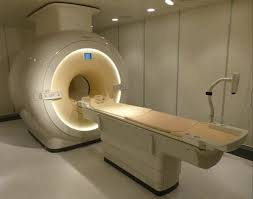
Anantnag, Apr 02: In a significant boost to healthcare infrastructure in douth Kashmir, Government Medical College (GMC) Anantnag is set to inaugurate its much-awaited Magnetic Resonance Imaging (MRI) facility, along with three modular operation theatres and a vitrectomy machine in the Department of Ophthalmology, likely tomorrow.
The development comes as a major relief for thousands of patients who, until now, have been forced to depend on expensive private diagnostic centres due to the absence of MRI services in government hospitals across south Kashmir.
For years, patients from Anantnag and adjoining districts have been grappling with limited access to advanced diagnostic facilities. MRI scans—essential for detecting neurological disorders, spinal injuries, tumours, and a range of internal conditions—were only available at private facilities, costing between Rs 5,000 and Rs 6,000 per scan.
Patients told that this financial burden often led to delays in diagnosis and treatment, particularly affecting economically weaker sections.
Rayees Ahmad, a local resident, recalled his ordeal, saying he was left shocked after being advised to undergo an MRI scan by doctors. “There was no option in any government hospital here. I had to visit a private centre and pay a hefty amount, which is not affordable for many,” he said.
Another patient, Aamir Ahmad, said that many people are forced to either borrow money or skip the test altogether. “Delaying such important diagnostics can worsen health conditions. This facility was needed long ago,” he added.
Healthcare professionals at GMC Anantnag have also consistently highlighted the urgency of establishing an MRI unit. A doctor at the institution noted that MRI is a non-invasive and highly advanced imaging technique that provides detailed insights into internal body structures, playing a crucial role in diagnosing a wide range of medical conditions.
“MRI is not just a diagnostic tool; it is vital for timely and accurate treatment decisions. Without it, clinicians are often handicapped in managing complex cases,” the doctor said.
The installation of the MRI unit marks the culmination of sustained efforts by the administration to strengthen tertiary care services in the region. Officials said a dedicated space had already been earmarked within the A-Block of the hospital for the facility.
In addition to the MRI facility, the inauguration of three modular operation theatres is expected to enhance surgical capacity and efficiency at the hospital.
Meanwhile, the introduction of a vitrectomy machine in the Ophthalmology Department will significantly improve treatment for complex eye conditions, including retinal disorders.
Residents and patients have welcomed the development, expressing hope that it will mark the beginning of further improvements in the region’s healthcare system—(KNO)