
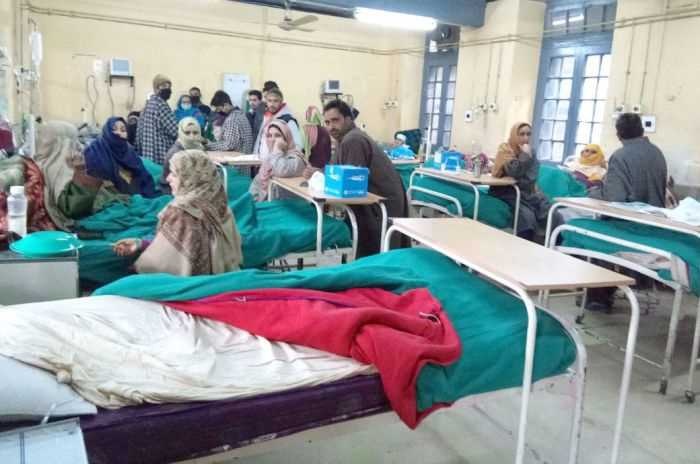
Say timely intervention during ‘golden hour’ often determines survival; call for trained staff, efficient referral systems to reduce preventable deaths
Srinagar, Oct 19 (KNO): Strengthening emergency medical services and upgrading trauma care facilities at district and sub-district hospitals across Jammu and Kashmir could significantly reduce preventable deaths and disabilities, medical experts have said, stressing that timely intervention during the first hour after an accident often determines whether an injured person survives or succumbs to injuries.
Doctors said that while advanced treatment facilities are available at major tertiary care hospitals, many critically injured patients from rural and remote areas lose valuable time travelling long distances before receiving definitive medical attention. They stressed that equipping peripheral hospitals with essential emergency facilities, trained personnel and life-saving equipment could improve survival rates and prevent complications.
Medical experts said the concept of the “golden hour” highlights the importance of providing prompt medical care to trauma victims, particularly those suffering from severe bleeding, head injuries, chest trauma and other life-threatening conditions.
“The first hour after a serious accident is extremely critical. In many cases, the difference between life and death depends on how quickly the patient receives appropriate medical attention. Immediate intervention can stabilise the patient and significantly improve the chances of survival,” Dr Shabir, a senior surgeon posted in south Kashmir, told the news agency – Kashmir News Observer (KNO).
He said patients injured in road accidents and other traumatic incidents often have to be transported to tertiary care institutions, including SKIMS and SMHS Hospital in Srinagar, even when some of their immediate medical needs could be addressed at nearby hospitals. The absence of adequately equipped emergency units at the peripheral level can result in delays in stabilising critically injured patients, increasing the risk of complications during transportation, he added.
“An injured person does not necessarily need to reach a major hospital before receiving life-saving treatment. The immediate priorities are to secure the airway, ensure adequate breathing, control severe bleeding and stabilise suspected fractures. If these interventions are available at the nearest district or sub-district hospital, the patient’s condition can be stabilised before referral to a higher centre,” he said.
Dr Shabir said peripheral hospitals should have essential emergency equipment, trained medical and paramedical staff, oxygen support, blood transfusion facilities where feasible, and arrangements for emergency surgical intervention according to their designated level of care.
Another health expert, Dr Rouf Ahmad Wani, said strengthening healthcare facilities at the district and sub-district levels was essential to ensure that patients received timely treatment closer to their homes. He said tertiary care hospitals should not be the first point of treatment for every accident victim when immediate stabilisation can be provided locally.
“If peripheral hospitals have trained emergency teams, essential equipment, diagnostic support and the capacity to perform immediate life-saving procedures, a significant number of complications can be prevented,” he said, adding that upgrading peripheral hospitals would reduce unnecessary referrals and ease the burden on tertiary hospitals.
Medical experts also emphasised the need for regular training programmes for doctors, nurses, paramedics, ambulance personnel and other first responders to improve the management of trauma cases. They said healthcare workers posted at peripheral hospitals should receive periodic training in trauma assessment, basic and advanced life support, bleeding control, patient stabilisation and safe transportation.
Doctors also stressed the importance of sensitising police personnel, volunteers and members of the public to basic first aid and safe practices for assisting accident victims before an ambulance arrives, cautioning that injured persons should not be moved unnecessarily, particularly when spinal injuries are suspected.
Experts called for an integrated system linking peripheral hospitals with district-level facilities and tertiary care centres through a coordinated referral network, with ambulances equipped according to their designated functions and emergency personnel trained to provide appropriate care during transportation.
“An effective referral system requires coordination between the hospital receiving the patient, the referring facility and the ambulance team. The receiving hospital should be informed in advance about the patient’s condition so that the required specialists and facilities are prepared before the patient arrives,” the experts said.
They said trauma care planning should take local geographical conditions, travel time, road connectivity, patient load and existing capacity into account, and called for periodic assessments of emergency facilities to identify gaps in staffing, equipment, infrastructure and referral arrangements.
“Strengthening peripheral infrastructure is not just about convenience; it is about saving lives. If district and sub-district hospitals are equipped to provide immediate life-saving care, patients can receive timely treatment while arrangements are made for further management wherever necessary,” Dr Shabir said. (KNO)