
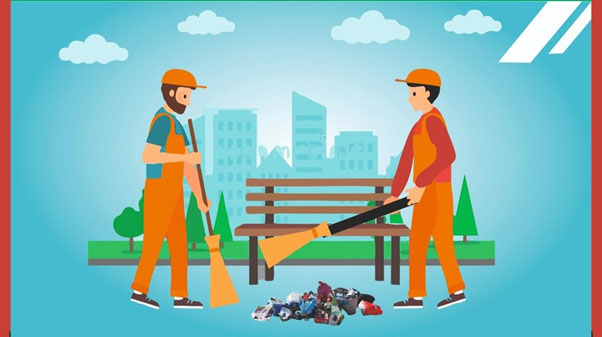
PM Modi has shown us the path. Now it is for us to walk it, together, as one nation, one people, with one mission, a Swachh Bharat where every citizen is a Safai Mitra and every act of cleanliness is a gift to our future.
Manohar Lal
I still recall the moment in 2014 when Prime Minister Narendra Modi picked up a broom and swept the streets of Delhi. It was far more than symbolism—it was a powerful reminder that the mission of a clean India cannot rest solely on the government but must be embraced by every citizen.
A clean India is a shared responsibility, and the true strength of the Swachh Bharat Mission has been how it has turned cleanliness into a people’s movement. It has turned every citizen into a ‘Safai Mitra’- from the student in schools to the homemaker, the shopkeeper to the worker in the fields and factories. Millions picked up the broom, transforming cleanliness from a government programme into a personal pledge of dignity, health, and pride.
That single vision sparked a true jan andolan, where cleanliness became a matter of honour and pride. Modi Ji’s calls of “Na gandagi karenge, na karne denge” and “Swachhata Hi Seva” inspired citizens across the country to act. What began as a government-led mission soon turned into the pride of every street, every neighbourhood, and every home, driven by an extraordinary wave of behavioural change.
In 2014, less than 40 percent of households had toilets. Today, thanks to Modi Ji’s leadership and the people’s participation, more than 12 crore families have access to sanitation. Through the Swachh Bharat Mission, India has been declared open defecation free. The slogan “Har Ghar Shauchalaya” is no longer just a promise, it is a reality, bringing safety and dignity to millions of women and children, along with improved health. The World Health Organization estimates that nearly 3 lakh children’s lives have been saved because of reduced diseases linked to open defecation. The Mission has now moved on to sustaining the ODF status and introducing comprehensive solid and liquid waste management, scientific processing of waste. The vision for SBM-Urban 2.0 is to achieve “Garbage Free” status by institutionalizing and nudging ‘Swachh’ behavior amongst the citizens.
Modi Ji’s genius has been to make the Swachh Bharat Mission about more than toilets and streets. It is about pride, culture, and the soul of the nation. From the Swachh Vidyalaya Abhiyan, giving schools separate toilets for girls and boys, to the Rashtriya Swachhata Kendra, a living tribute to Mahatma Gandhi, every initiative has inspired citizens to see cleanliness as a mark of respect for themselves and their country. Festivals are brighter when they are plastic free, celebrations are more joyful when they do not leave behind waste, and each citizen understands that their small act contributes to a larger national pride.
We have witnessed a remarkable journey of the Swachh Bharat Mission envisioned by the Hon’ble Prime Minister—millions of toilets constructed, villages and cities declared ODF, and citizens embracing cleanliness as a shared responsibility. It has been my firm belief that the campaign must now seek to transform collective consciousness into daily discipline, making Swachhata not just a practice but a way of life, and ensuring that the gains of the past decade form the foundation of a cleaner, healthier, and more dignified India for generations to come. Most importantly this phase of the Mission focusses on developing the capacities of local bodies not just to look visibly clean but address the issue of waste processing and remediation of legacy dumpsites. Even the largest cleanliness survey, Swachh Survekshan, now measures the city cleanliness on parameters of door-to-door waste collection, handling and processing of waste.
With this vision, we celebrated last year’s SHS week (SHS-24) under the theme “Swabhav Swachhata – Sanskar Swachhata,” which reflects a profound shift—from infrastructure to instinct, from compliance to culture. Guided by the vision of the Prime Minister, we aim to establish cleanliness not as an obligation, but as a reflection of our character and values. Every citizen must internalise it as a daily habit and moral responsibility. By embedding cleanliness into our swabhav (nature) and sanskar (ethos), we are not just sweeping streets—we are shaping a more dignified, healthier, and united India. True transformation will come when Swachhata becomes second nature, passed down through generations as a cherished legacy.
As the festive season begins, the Hon’ble Prime Minister has reminded us that celebrations are most meaningful when they are clean and eco-friendly. Festivals, he has said, should leave behind memories of joy, not piles of waste. In this spirit, Swachhata Hi Seva (SHS) 2025 is being observed from 17th September to 2nd October under the theme “Swachhotsav”, with a focus on sustainability—promoting plastic-free villages, zero-waste festivals, and waste segregation at source. The campaign reinforces that cleanliness is not a one-day effort but a continuous responsibility towards future generations.
On the special call of Prime Minister Modi, Swachhata Hi Seva (SHS) 2025 once again observed “Ek Din, Ek Ghanta, Ek Saath” on 25th September, the birth anniversary of Pandit Deendayal Upadhyay. On this day, crores of Indians dedicated one hour to voluntary shramdaan, reaffirming that cleanliness is everyone’s responsibility. Last year alone, over 8 lakh neglected spots in towns and villages were transformed into vibrant public spaces—proving that collective effort can make cleanliness visible, tangible, and truly life-changing.
The greatness of this mission lies not only in its achievements but in its spirit. Modi Ji did not ask citizens to merely keep their homes clean, he asked them to take ownership of their streets, parks, rivers, and nation. He did not speak as a distant leader but as one among us, appealing for one broom, one act, one hour. And because he spoke from the heart, the people responded from theirs.
Narendra Modi is not only the architect of the Swachh Bharat Mission, but he is also its living soul. He is the lamp that lit the flame of cleanliness in every home. He is the gardener who sowed the seeds of dignity and nurtured them with the water of people’s participation. He is the sentinel who reminds us that cleanliness is not the duty of someone else but the right and responsibility of each one of us.
Every sweep of the broom, every clean corner, every plastic bag refused is not just about sanitation, it is about dignity, pride, and the India we want to leave behind for our children. As Modi Ji says, “Sabka Saath, Sabka Vikas, Sabka Vishwas” is incomplete without “Sabka Saath, Swachhata ka Vikas.” Cleanliness is not someone else’s work; it is everyone’s mission.
I urge everyone not to confine Swachhata to a single day or a Pakhwada, but to carry this spirit throughout the year. Swachhata is not an event—it is a way of life. Each of us must take responsibility in our homes, neighbourhoods, and communities, and practice it every single day. Let us make cleanliness a daily discipline and commit ourselves to the pledge of “Har Din, Ek Ghanta, Ek Saath”—one hour of collective effort, every day. When every citizen contributes a little, our nation shines brighter—clean, vibrant, and proud—realising the dream of a Swachh Bharat envisioned by Mahatma Gandhi, brought to life by Prime Minister Modi, and cherished by every Indian.
Modi Ji has shown us the path. Now it is for us to walk it, together, as one nation, one people, with one mission, a Swachh Bharat where every citizen is a Safai Mitra and every act of cleanliness is a gift to our future.
The author is the Union Minister for Housing & Urban Affairs and Power. The views and opinions expressed in this article are personal.