
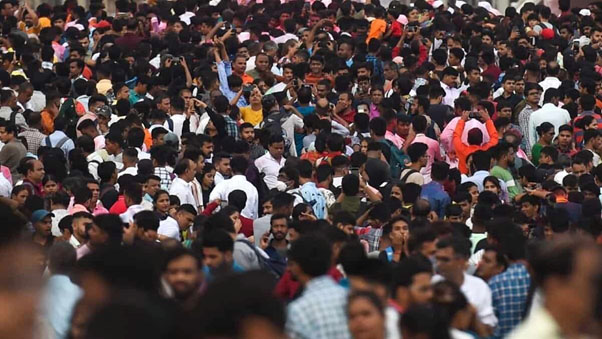
United Nations, Nov 19: United Nations, India, along with six other countries, “will shape the future growth of the city population” of the world as they are expected to add more than 500 million city residents between 2025 and 2050, the UN said.
The ‘World Urbanisation Prospects 2025: Summary of Results’, released by the United Nations Department of Economic and Social Affairs (UN DESA), said that the world is becoming increasingly urban, with cities now home to 45 per cent of the global population of 8.2 billion.
The report said that the growth of the world’s city population between now and 2050 will be concentrated in seven countries: India, Nigeria, Pakistan, Democratic Republic of the Congo, Egypt, Bangladesh and Ethiopia.
These seven countries, which host nearly one third (30 per cent) of the global population in 2025, “will shape the future growth of the city population” and are projected to contribute over half of the global growth of city dwellers by 2050.
Taken together, these seven countries are expected to add more than 500 million city residents between 2025 and 2050, accounting for over half of the projected 986 million increase in the global number of city dwellers over that period.
“The success or failure of urbanisation in these key countries will shape global development outcomes. Their ability to manage city growth sustainably will have profound implications not only for their populations but also for global progress toward the Sustainable Development Goals and climate objectives,” the report said.
The report said that the two most populous countries, India and China, will also have the largest populations residing in towns between now and 2050. As of 2025, the proportion of people living in towns has reached 44 per cent in India and 40 per cent in China. Together, India and China account for more than 1.2 billion town population, representing over 40 per cent of the population living in towns globally.
However, both countries also have substantial city populations, with a combined population of nearly 1.2 billion (627 million in China and 589 million in India in 2025).
Between 1950 and 1975, both countries experienced rapid growth in their city populations, but this pace slowed between 1975 and 2000 and in subsequent years, largely due to declining fertility rates and slower overall population growth.
Despite this deceleration, city population growth has outpaced town population growth, resulting in a decrease in the share of people living in towns. Each country still has more than 200 million people residing in rural areas, a figure that is expected to remain relatively stable through 2050, it said.
The report said that the number of megacities quadrupled from eight in 1975 to 33 in 2025, with 19 in Asia. Projections indicate that there will be 37 megacities globally by 2050, as the populations of Addis Ababa (Ethiopia), Dar es Salaam (United Republic of Tanzania), Hajipur (India) and Kuala Lumpur (Malaysia) grow to over 10 million.
Among the 33 megacities with 10 million inhabitants or more in 2025, 19 are in Asia. India alone has five megacities, and China has four.
Worldwide, more than 3,000 cities experienced population decline between 2015 and 2025.
“Most cities with shrinking populations have fewer than 250,000 inhabitants in 2025. More than one third are in China and another 17 per cent are in India,” it said, adding that growth and decline can occur simultaneously within countries. Some cities’ populations shrank even as their country’s population grew. Conversely, some cities’ populations grew despite shrinking national populations.
Despite the global shift towards city life, towns remain (in 2025) the most common settlement type in 71 countries. Countries in all regions and at diverse levels of economic development are found within this group, including Germany, India, Uganda and the United States of America.
Together, India and China host more than 1.2 billion town dwellers, representing over 40 per cent of the global population of towns. The towns of sub-Saharan Africa and of Central and Southern Asia are expected to continue to experience robust population growth between 2025 and 2050.
From 2000 to 2025, the global population living in cities increased by 1.25 billion, but over half of this growth came from only a few countries. India, China, Nigeria, Pakistan and the United States of America have collectively contributed over 500 million people to the global city population.
Additionally, five other countries – Indonesia, Egypt, Bangladesh, the Democratic Republic of the Congo and Brazil – added another 187 million city dwellers. In contrast, several countries in Eastern Europe, including Ukraine, Romania, Poland, the Republic of Moldova and Hungary, along with Japan in Eastern Asia, experienced a significant decline in their city populations.
“In the world’s two most populous countries, India and China, towns currently accommodate nearly one seventh of the global population, a proportion expected to persist at least through the mid-century,” it said.
United Nations Under-Secretary-General for Economic and Social Affairs Li Junhua said that as governments convene at COP30 to advance global climate commitments, the United Nations underscores the pivotal role of urbanisation in driving sustainable development and climate resilience across all settlement types.
“Urbanisation is a defining force of our time. When managed inclusively and strategically, it can unlock transformative pathways for climate action, economic growth, and social equity. To achieve balanced territorial development, countries must adopt integrated national policies that align housing, land use, mobility, and public services across urban and rural areas,” he said.