
The power of AI in India will not be measured by the sophistication of its algorithms, but by its capacity to level the playing field
As India gears up to host the India–AI Impact Summit 2026, the most impactful stories are not about algorithms or automation, but about inclusion. The true promise of AI lies in amplifying human potential, especially among women, informal workers, and the youth who have long remained at the periphery of the formal economy.
Guided by the vision of “Making AI in India and Making AI Work for India,” the Cabinet approved the IndiaAI Mission in March 2024. Under the leadership of Shri Ashwini Vaishnaw, Hon’ble Union Minister for Electronics and Information Technology, the IndiaAI Mission team began work on strategically designing and implementing key initiatives such as IndiaAI Compute Capacity, the IndiaAI Innovation Centre (IAIC), the IndiaAI Datasets Platform, the IndiaAI Application Development Initiative, IndiaAI FutureSkills, IndiaAI Startup Financing, and Safe & Trusted AI.
The Mission’s focus on inclusive growth is strongly reflected in the IndiaAI Innovation Centre, which is developing multilingual Large Language Models and domain-specific foundational models tailored to India’s diverse socio-economic contexts. These models, trained using the national GPU grid, are being designed to serve women entrepreneurs, farmers, gig workers, and small retailers through vernacular AI assistants, micro-advisory tools, and sector-specific knowledge engines.
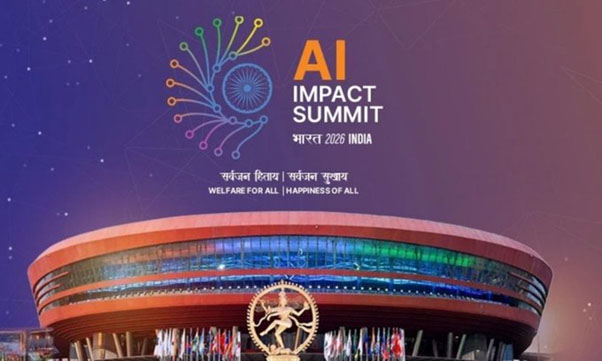
While much of the global dialogue around AI has focused on productivity gains and competitiveness, in India, its most powerful impact may be its ability to democratize access to work, to learning, to safety, and to opportunity. This vision of AI as a tool for inclusion will be at the heart of the India–AI Impact Summit 2026, to be held in February. Bringing together policymakers, innovators and industry leaders, we aim to chart a discourse around how AI can be harnessed for People, Progress, and the Planet.
In India’s expanding gig and platform economy, women are increasingly shaping a new digital workforce, one empowered by AI. Whether it is women entrepreneurs leveraging AI-driven marketplaces, or women drivers and delivery partners navigating safely through AI-powered safety systems, the technology is quietly reshaping agency and opportunity. Take, for instance, beauty and wellness platforms that use AI-based matching algorithms to pair customers with service professionals based on proximity, skill, and past performance. A majority of these professionals are women who now enjoy flexible hours, predictable income, and enhanced safety through AI-enabled verification and tracking. Similarly, ride-hailing platforms have integrated intelligent safety systems from real-time location sharing to voice-activated emergency features allowing women drivers to work with greater confidence and independence. While these systems existed before, AI has increased safety, reliability and efficiency of these platforms.
In rural and semi-urban India, AI-enabled financial tools are promoting digital inclusion. Vernacular AI assistants and voice-based digital payment systems are helping women overcome literacy and language barriers, enabling them to manage finances independently and securely.
For India’s youth, AI is not merely a tool; it is an entry point into a new economy. Across states, government and private sector collaborations are building a pipeline of AI-skilled talent, from basic digital literacy to advanced machine learning. The Government of India has recently launched the YUVA AI for All National AI Literacy Campaign under the IndiaAI Mission. Anchored on National Youth Day, the initiative aims to create foundational AI awareness among lakhs of students and young learners through a short, self-paced “AI 101” course. By leveraging existing school, higher education, and digital learning ecosystems, YUVA AI for All seeks to democratise access to AI knowledge, positioning AI literacy as a core life skill rather than a specialised privilege, and ensuring that India’s youth across regions, languages, and socio-economic backgrounds are prepared to participate meaningfully in the AI-driven economy.
AI’s role in inclusion extends beyond employment into public welfare. Startups like MyGate and SafeHouse Tech use AI-driven analytics to strengthen safety for women in residential and workplace settings. AI-powered grievance redressal systems are being integrated into government helplines such as 112 India, enabling quicker response times and data-driven deployment of emergency services.
In the agriculture sector, AI tools such as Kisan AI use machine learning models to predict pest infestations and weather-related risks, empowering women farmers to make informed, resilient decisions. Similarly, fintech innovators like Indifi and Kinara Capital are leveraging AI-driven credit scoring to extend credit to women-led enterprises that have historically lacked access to formal financial systems. This vision is also reflected in NITI Aayog’s report, AI for Inclusive Societal Development. The report shows how AI can empower India’s 490 million informal workers by expanding access to healthcare, education, skilling, and financial inclusion. It highlights how AI-driven tools can boost productivity and resilience for millions who form the backbone of India’s economy.
As AI becomes increasingly integrated into economic and social systems, ensuring its ethical and inclusive use has become a national priority. Anchored in the principle of “AI for All,” India’s approach focuses on fairness, transparency, and accountability to ensure that technology amplifies opportunity rather than inequality. By embedding AI into everyday platforms from payments and logistics to education and public services India is building an inclusive digital ecosystem that empowers people at every level. India has also implemented the Digital ShramSetu, a national mission dedicated to integrating cutting-edge technologies into India’s informal economy. The implementation model is built on four pillars: identifying key needs by sector or persona, empowering state governments for execution, creating an enabling regulatory environment, and forming partnerships to drive down costs and ensure broad access. It will bring together government, businesses, and NGOs, all operating under a rigorous system for measuring impact. This model of accessibility and equity offers a compelling blueprint for the Global South on how AI can enable large-scale social and economic transformation.
If the first wave of India’s digital revolution, led by Digital India and UPI, connected citizens, the next must ensure that AI connects them to opportunity. That means designing systems that are multilingual, gender-sensitive, and accessible, where the rural woman entrepreneur, the data labeler from Nagaland, and the young coder from Bhopal all have a stake in India’s AI future.
The power of AI in India will not be measured by the sophistication of its algorithms, but by its capacity to level the playing field. Women, youth, and informal workers are not passive beneficiaries, they are becoming the architects of a more equitable AI economy. As the world looks toward India at the India–AI Impact Summit 2026, it will see a nation proving that inclusion is not a byproduct of technology, it is its greatest innovation.
The writer is Scientist ‘G’, Group Coordinator, MeitY; COO IndiaAI Mission