If the shock from the closure of the Strait of Hormuz has revealed economic vulnerabilities, it has also illuminated stark differences in how countries absorb energy-price turbulence. Those that have invested in more resilient clean energy sources are faring better and offering lessons for everyone else.
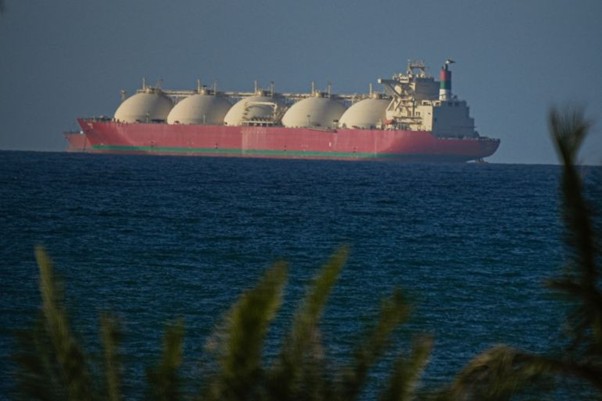
The closure of the Strait of Hormuz has triggered what the International Monetary Fund calls a “global yet asymmetric” rupture, disrupting the flow of roughly one-quarter of oil, one-fifth of liquefied natural gas, and one-third of fertilizer supplies. Energy and fertilizer prices have risen, supply chains have rerouted, and financial conditions have tightened unevenly around the world.
Import-dependent economies in Asia, Africa, and parts of Europe have been hit hardest, with many facing higher bond spreads and credit downgrades. As central banks weigh their responses to surging fuel and food prices, the rise in global interest rates is squeezing what little fiscal and policy space developing countries still have.
But if the “Hormuz shock” has laid bare economic vulnerabilities, it has also illuminated something else: the stark differences in how countries absorb turbulence. One of the most salient fault lines in the world nowadays is not simply between oil-exporting and oil-importing countries, but between countries whose energy systems leave them exposed and those who began building energy resilience long before the crisis arrived.
Spain’s renewables revolution offers the starkest illustration of what is possible. Its rapid wind and solar growth has cut the share of hours in which gas sets the domestic electricity price from 75% in 2019 to just 19% in 2025—the sharpest reduction among Europe’s major gas-reliant power markets. While wholesale electricity prices in Germany and Italy have been well above €150 ($177) per megawatt-hour during the Hormuz shock, Spain’s average wholesale price for 2026 is projected to be €60–70/MWh.
Brazil’s extensive biofuels infrastructure has provided a similar buffer, though by a different route. Tens of millions of Brazilian drivers can choose between 100% sugarcane-based ethanol or gasoline blended with 30% biofuel, supported by one of the world’s largest fleets of flexible-fuel vehicles. Because domestic gasoline includes a substantial biofuel share, fuel refined by the state-run energy major Petrobras has remained dramatically cheaper than imported gasoline equivalents, cushioning consumers from global oil volatility. Brazilian gasoline prices rose just 5% in March, compared with roughly 30% in the United States, and Mexico’s president has publicly expressed interest in Brazil’s ethanol technologies, including agave-based production.
China, too, has proven more resilient than many would have guessed. After a decade of investment, renewables account for nearly 40% of its electricity generation, up from 26% a decade ago, and it has amassed strategic petroleum reserves of more than 1.2 billion barrels. As a result, Goldman Sachs has revised China’s GDP growth forecast down by only half as much as that of the US, identifying renewable-energy dominance as one of the “shields” protecting its economy.
No wonder energy analysts are describing the Iran war as “Asia’s Ukraine moment.” Just as the Russian invasion of Ukraine in 2022 compelled Europe to reduce its reliance on natural gas, the Hormuz shock is pushing Asian countries to cut their oil dependencies. Moreover, cleaner alternatives are now significantly cheaper and more readily available than they were in 2022.
The lesson is clear: vulnerability is a function of structural and policy choices, not just of trade balances. Every country must ask how much of its energy system it controls, how diversified its supplies are, and whether it has built sufficient insulation between global commodity markets and ordinary people. For fossil-fuel-dependent economies that neglected the energy transition, there is an additional warning: if this crisis accelerates other countries’ shift to renewables, stranded assets and shrinking export markets may compound the pain of future shocks.
As many governments wait for multilateral institutions to respond, realities on the ground are changing fast. At the same time, oil and gas producers have a rare window of opportunity. As the University of Massachusetts Amherst economists Isabella M. Weber and Gregor Semieniuk have argued, fossil-fuel price shocks are redistribution episodes: costs are imposed on the entire population while profits flow only to shareholders. That is why windfall profit taxes, such as the one recently championed by five EU finance ministers, are so urgently needed.
The additional revenues could serve two urgent priorities. The first is consumer protection. Higher energy prices are a regressive tax on the poor. Without active intervention, this crisis will deepen inequality within oil-exporting countries, just as it does elsewhere. Short-term subsidies, targeted energy vouchers, and price-stabilization mechanisms are legitimate uses of windfall receipts, precisely because the shock is temporary and the revenues will not last.
The second priority is structural investment. State-owned enterprises like Petrobras have already begun investing in biofuels and low-carbon technologies, and the Hormuz crisis could provide them with additional resources for this purpose.
Likewise, sovereign wealth funds offer a proven mechanism for institutionalizing the link between windfall revenues and long-term energy-transition goals. The Malaysian sovereign wealth fund, for example, has committed RM1.5 billion ($378 million) to decarbonize industrial parks and is building green investment platforms targeting renewable energy, storage, and e-mobility. Indonesia’s new Danantara sovereign wealth fund has struck agreements to develop renewable energy and green hydrogen facilities, directly linking resource wealth to clean-technology value chains.
Even Senegal, a relatively small producer, has established the Renewable Energy and Energy Efficiency Fund through its sovereign vehicle FONSIS. It is mobilizing equity investments in renewables across the West African Economic and Monetary Union, as well as positioning itself to channel future gas revenues into green industrialization.
This is how countries shift from exposure to autonomy: by transforming yesterday’s rents into tomorrow’s capital base. Seizing this moment means converting temporary windfalls into durable assets and treating green industrial strategy as necessary for national resilience. The countries that act now will be glad they did when the next crisis arrives.
Laura Carvalho is Director of Economic and Climate Prosperity at the Open Society Foundations and Associate Professor of Economics at the University of São Paulo. Her research focuses on the intersection between macroeconomics and development economics, particularly the relationship between economic growth and income inequality. She wrote a weekly column for Folha de São Paulo, Brazil’s largest newspaper, and is the author of Valsa Brasileira: do boom ao caos econômico (Todavia, 2018).
Source: Project Syndicate