
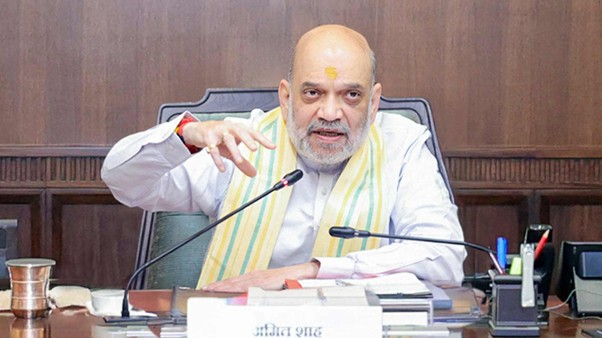
New Delhi, May 10: In a decisive move to bolster India’s disaster resilience, Union Home Minister and Minister of Cooperation, Amit Shah, directed a comprehensive review of the country’s preparedness to tackle floods and heat waves. The high-level meeting, held in New Delhi, underscored the government’s renewed commitment to implementing a “Zero Casualty Disaster Management” vision under Prime Minister Narendra Modi’s leadership.
Amit Shah emphasized the urgent need for proactive measures, including the establishment of Flood Crisis Management Teams (FCMTs) across all states. These specialized teams are tasked with ensuring rapid response and effective management during flood emergencies. The Home Minister also called for the development of an integrated flood forecasting system at both the central and state levels, highlighting the importance of early warning mechanisms.
A key part of the strategy involves expanding the scope of early warning systems. Shah proposed that at least 60 lakes be incorporated into a preliminary plan to develop early warning infrastructure for 30 high-risk lakes in vulnerable regions such as Jammu & Kashmir, Ladakh, Uttarakhand, Himachal Pradesh, Arunachal Pradesh, and Sikkim. These efforts will be supported by the National Disaster Management Authority (NDMA), with an emphasis on monitoring and predicting flood patterns more accurately.
The Home Minister also stressed the importance of reviewing compliance with existing NDMA guidelines for disaster management, including those related to forest fires and heat waves. He instructed NDMA to conduct a study assessing how effectively states are implementing these directives, aiming to strengthen disaster response at district and municipal levels.
In line with the government’s climate adaptation agenda, the Home Minister called for increased focus on water conservation initiatives. He advocated for the construction of check dams and water storage projects to enhance groundwater levels and mitigate the impacts of heat waves. The utilization of the CAMPA Fund was also emphasized as a means to promote environmental balance and climate resilience.
Amit Shah highlighted the necessity of a master plan to address evolving weather patterns driven by climate change. This plan should adopt a “Whole of Government” and “Whole of Society” approach, integrating efforts across ministries, departments, and local communities. He urged officials to prioritize strengthening existing weather apps and portals, ensuring effective dissemination of forecasts and warnings to grassroots levels.
The Home Minister expressed particular interest in improving monsoon forecasts, advocating for detailed assessments of casualties, forecast accuracy, and agricultural damage during monsoon seasons. He praised ongoing efforts by various ministries and departments, noting significant improvements such as extending rainfall and flood forecast lead times from 3 to 7 days and enhancing heatwave prediction standards.
The meeting was attended by senior officials, including Union Jal Shakti Minister C. R. Patil, the Union Home Secretary, heads of NDMA, NDRF, IMD, and other key departments. Their collective focus is now on translating these directives into actionable plans to safeguard lives and property from natural calamities.
Under Prime Minister Narendra Modi’s leadership, these initiatives reflect a resolute push toward disaster preparedness, with the ultimate goal of minimizing casualties and ensuring resilient communities across India.