
A state that does not secure its frontiers, alliances and trade routes cannot secure its future: Kautilya
Kautilya’s lesson, written into the grammar of statecraft centuries ago, has returned with unusual force in our time. Nations today are again being tested not merely by the size of their economies or the strength of their armies, but by their ability to read geography, anticipate the future and act before opportunity turns into vulnerability. Great Nicobar is one such test for India.
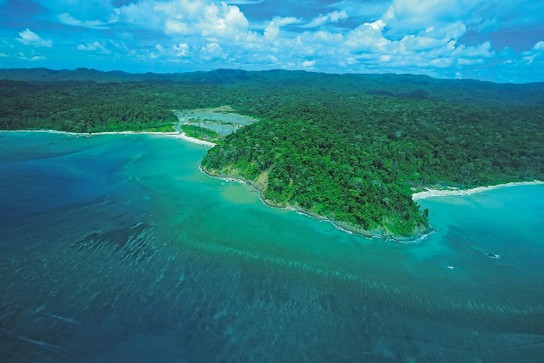
It may appear as a distant island at the south-eastern edge of the Indian map, to be left untouched, as it largely has been for decades. Great Nicobar is India’s forward maritime post. Located close to some of the most important seaways of the Indo-Pacific, it is one of India’s most important strategic windows to the world. That is why the proposed development of Great Nicobar cannot be understood merely as an infrastructure project. It is not just about a port, an airport, a township or a power plant. It is a strategic test about whether India is prepared to convert a rare geographical advantage to further bolster its Comprehensive National Power.
For centuries, the Indian Ocean shaped India’s destiny, carrying our trade, ideas, civilisational influence and, at times, our vulnerabilities. Yet, for much of the post-Independence period, India’s strategic imagination remained heavily continental.
It is undisputed that Great Nicobar occupies a position of exceptional strategic importance. It is one of the largest islands in the archipelago, with an area of about 910 sq. km. The total project area of 166.10 sq. km is only about 2 per cent of the total area, of which 130.75 sq. km, approximately 1.82 per cent of the total forest area of the Islands, is proposed for diversion.
It lies close to South-East Asia and sits near major global sea lanes, including the Malacca Strait, the Six Degree Channel, the Sunda Strait and the Lombok Strait. In the true strategic sense, it is India’s eastern maritime outpost.
Its importance becomes clearer when it is viewed not from the strategic lens of the high seas. Imagine the ships moving from the Gulf of Aden towards the Malacca Strait, energy cargo sailing from West Asia and Africa towards East Asia, container traffic connecting Asia, Africa and Europe, naval assets, surveillance platforms and logistics chains moving through these waters.
The Indian Ocean is increasingly becoming a crowded strategic arena. Energy flows, container traffic, naval deployments, island facilities, undersea cables and maritime surveillance are now part of a larger contest, invisible perhaps to many sitting on the mainland, but decisive for the future of nations.
A recent development is that a decades old proposal for a canal connecting Andaman Sea to the Gulf of Thailand has been shelved. Instead, an overland 90 km multi-modal land bridge connecting two newly designed deep-sea ports along the tenth parallel – one in Ranong on the Andaman Sea and another in Chumphon on the Gulf of Thailand, along with dual track high speed rail, multi lane road, energy pipelines for oil and gas and air-digital grid, is pending final approval. All these factors completely redefine the Indo-Pacific trade route and shift the economic centre of gravity directly into the Andaman basin.
The Strait of Malacca is among the world’s most important chokepoints. It connects the Indian Ocean with the Pacific and carries energy (oil and LNG) and commerce of enormous value. Great Nicobar’s Galathea Bay is about 45 km from the Six Degree Channel, which connects the Malacca Strait with routes leading towards Africa, the Middle East and Europe. Around one lakh ships pass annually through the Malacca Strait–Six Degree Channel route. The island’s proximity to the Malacca, Sunda and Lombok chokepoints gives India significant strategic advantage. No serious maritime power can afford to ignore such geographical facts.
Across the IOR, powerful countries are steadily expanding their presence through ports, logistics arrangements, maritime access facilities, naval assets, surveillance systems and economic corridors.
India’s answer cannot be hesitation. It must be strategic consolidation. Sovereignty is not strengthened merely by drawing lines on a map. It is strengthened when territory becomes connected, inhabited, serviced, productive and strategically usable. The International Container Transshipment Port, greenfield airport, township and power plant are not isolated projects. Together, they create the ecosystem needed for India to maintain a credible, sustained and multidimensional presence at a decisive maritime location.
The National Green Tribunal, after due diligence and liquidation of observations, acknowledged the project’s great significance not only for economic development of the island and surrounding areas of strategic location, but also for defence and national security.
Singapore did not become a great maritime hub merely because it was well located. It built capacity around that location. Location gave it opportunity and its infrastructure converted that opportunity into influence. Diego Garcia offers another lesson from the Indian Ocean. It shows how a remote island, when equipped with logistics and operational infrastructure, can acquire outsized strategic significance. The maritime build the necessary capacity to use geography.
Great Nicobar allows India to do this in a balanced and distinctly Indian way. It can support trade and strengthen national security, reduce dependence on foreign transshipment hubs, enhance India’s maritime reach and can serve as a gateway to South-East Asia and a platform for the wider Indo-Pacific. A transshipment port at Great Nicobar can reduce dependence of India’s transhipped cargo handled at foreign ports, improve supply-chain resilience, attract investment, generate employment and give India greater certainty over movement of its own cargo.
Of course, Great Nicobar is environmentally sensitive. Any project of this scale must be implemented with ecological care, legal compliance, scientific monitoring and genuine mitigation. Development cannot be careless. But ecological sensitivity cannot become a permanent veto on strategic thinking. The real challenge is not to choose between ecology and national security. The challenge is to pursue national security with ecological responsibility.
The real question is whether India wants to responsibly develop a strategic island, or whether it will leave that island under-connected at a time when the entire Indo-Pacific is being reorganised.
India is both a continental and maritime power. For too long, the continental mind overshadowed the maritime one. The Great Nicobar project is therefore not an extravagance, but a strategic foresight. A nation’s destiny is shaped not only by the threats it faces, but by the opportunities it recognises in time. Great Nicobar is one such opportunity. To neglect it would be to leave geography unused and vulnerable to being shaped by others. To develop it wisely would be to turn geography into strength.
India does not need to apologise for thinking strategically. It only needs to act responsibly, decisively and with a clear sense of national interest. In the Indo-Pacific century, Great Nicobar is not the edge of India. It is India’s watchtower at the gateway of the future.
The author is currently the Lt. Governor of the Andaman and Nicobar Islands and Vice Chairman of the Islands Development Agency. He is a former Chief of the Naval Staff and Commander-in-Chief of the A&N Command during 2009-10.