Says Gandhi called Kashmir ray of hope during Partition
Proposes permanent Interfaith Dialogue Centre in J&K
Calls Urdu Indian language deserving promotion
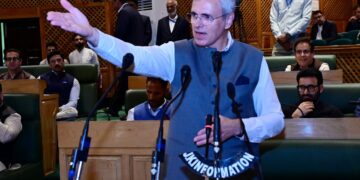
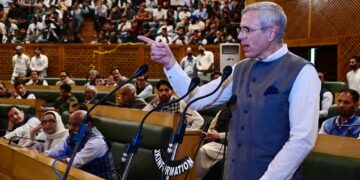
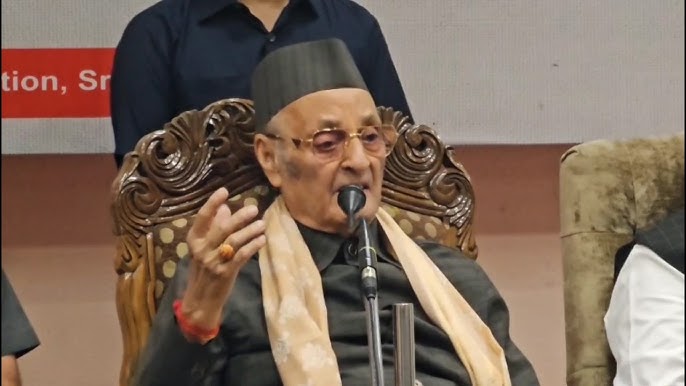
Srinagar, Jun 27: Former “Sadr-e-Riyasat” Dr Karan Singh on Saturday invoked Mahatma Gandhi’s famous description of Kashmir as a “ray of hope” during the violence of Partition, saying the Valley must continue to uphold its centuries-old tradition of communal harmony, interfaith understanding and cultural pluralism that earned it that distinction.
Addressing an Interfaith Dialogue at the Sher-i-Kashmir International Conference Centre (SKICC) here, Dr Singh, as reported by the news agency—Kashmir News Observer (KNO), congratulated the organisers for bringing together discussions on interfaith dialogue, Urdu, Kashmiriyat and communal harmony under one platform, saying each of these themes was significant enough to merit separate deliberations but collectively reflected the essence of Kashmir’s civilisational legacy.
He advocated the promotion of Urdu and proposed the establishment of a permanent Interfaith Dialogue Centre in Jammu and Kashmir.
Calling Kashmir the “crown of India”, Dr Singh recalled Mahatma Gandhi’s remarks during the Partition period. “Gandhiji had said that if there was any ray of light and hope visible to him during those difficult times, it was in Kashmir,” he said, attributing that distinction to the Valley’s enduring tradition of communal harmony and coexistence.
He urged the people of Jammu and Kashmir to preserve that legacy by strengthening mutual trust, safeguarding the region’s shared cultural and spiritual heritage and ensuring that future generations continue to uphold the values of unity in diversity.
Tracing the history of the global interfaith movement, Dr Singh recalled the first Parliament of the World’s Religions held in Chicago in 1893, where Swami Vivekananda impressed the world with India’s message of universal acceptance and respect for all faiths.
He said the movement was revived in 1993 and has since evolved into a global platform for promoting dialogue among religions. Recalling his own association with the movement, he said he has participated in several international interfaith gatherings over the years.
Explaining the concept of interfaith dialogue, Dr Singh said it was not meant to establish the superiority of one religion over another. “This is not Shastrarth. Every religion has its own philosophy and values. The objective is to understand each other and strengthen harmony,” he said.
Quoting the Rig Vedic verse ‘Ekam Sat Vipra Bahudha Vadanti’, he said truth is one though expressed in different ways, adding that while religions may follow different paths, they ultimately lead to the same Divine.
Drawing an analogy with the different routes leading to the Shankaracharya hill, he said the paths may vary, but the destination remains one.
Highlighting India’s unique civilisational diversity, Dr Karan Singh said the country is home to nine major religious traditions—Hinduism, Islam, Buddhism, Sikhism, Christianity, Jainism, Judaism, Zoroastrianism, and the Bahai Faith, making India uniquely positioned to strengthen interfaith understanding.
Reflecting on Kashmir’s spiritual journey, Dr Singh said the Valley witnessed the flourishing of Vedic traditions, Buddhism, Kashmir Shaivism and the teachings of philosopher Abhinavagupta before mystic Lal Ded carried spirituality to the masses in the local language.
He said the subsequent arrival of Sufi saints, including Shah-e-Hamdan, Sheikh Noor-ud-Din Noorani and other revered spiritual leaders, further enriched Kashmir’s composite culture and strengthened its traditions of coexistence.
“The world needs love, not hatred. We may belong to different religions, speak different languages and come from different regions, but first and foremost we are human beings,” he said.
Dr Singh also proposed establishing a permanent Interfaith Dialogue Centre in Kashmir to institutionalise dialogue among different religious communities and strengthen the Valley’s long-standing tradition of peaceful coexistence.
Referring to the work of the Dara Shikoh Centre, he said similar initiatives should continue in Jammu and Kashmir to deepen civilisational and interfaith engagement.
Dr Singh also strongly advocated the promotion of Urdu, describing it as an Indian language and an inseparable part of the country’s composite cultural heritage.
“Urdu is one of the richest literary traditions of the subcontinent. The language deserves greater recognition and encouragement,” he said. “Urdu was born in India. It is not a foreign language. It should be preserved, promoted and used wherever possible.”
Recalling his admiration for Urdu poetry and his interaction with renowned poet Faiz Ahmed Faiz, he said the renowned poet had once told him that his celebrated poem “Aap Aaye To Bahaar Aayi” was written during his imprisonment.
Expressing confidence in Kashmir’s future, Dr Singh said the Valley has historically demonstrated that people belonging to different religions, languages and traditions can live together in peace and hoped it would continue to serve as a beacon of interfaith harmony, cultural pluralism and national unity for the rest of the country. (KNO)