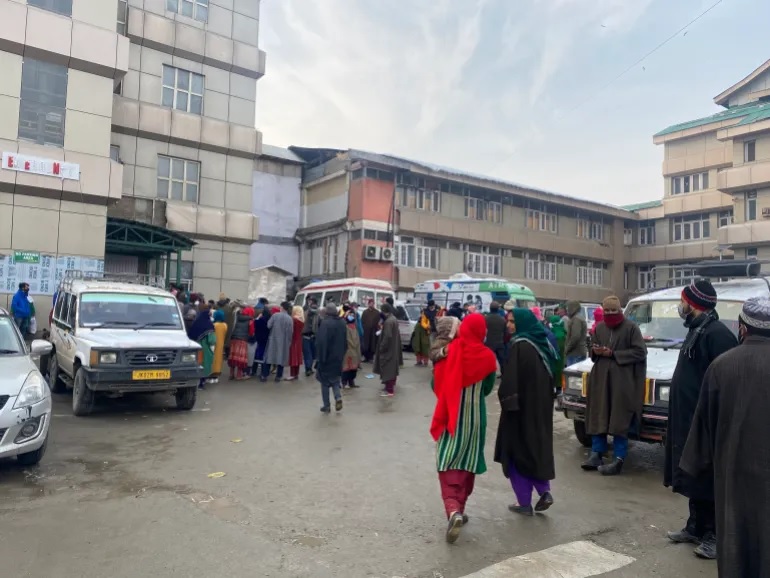
Patients, doctors seek regulation, say traffic chaos delays ambulances, inconveniences visitors
Srinagar, Jul 14: The main entrances of several major hospitals in Kashmir, particularly tertiary care institutions – SMHS Hospital, SKIMS Soura, Lal Ded (LD) Hospital and Bone and Joint Hospital – have become severely congested due to the unchecked presence of roadside vendors, e-rickshaws, auto-rickshaws and other vehicles, raising serious concerns over patient safety and emergency healthcare access.
Patients, attendants, doctors and ambulance drivers told the news agency—Kashmir News Observer (KNO) that the lack of regulation outside hospital gates has resulted in daily traffic bottlenecks, making it difficult for ambulances, emergency vehicles and even healthcare workers to enter or exit the hospital premises without delay.
According to them, hospital entrances remain crowded throughout the day as vendors occupy portions of the roadside while e-rickshaws and auto-rickshaws are parked haphazardly, reducing the available space for smooth traffic movement.
Shahnaza Bano, a patient from Baramulla undergoing treatment at SMHS Hospital, said the entrance to the hospital resembles a busy marketplace rather than a healthcare facility.
“The gate remains heavily congested from morning till evening. E-rickshaws are parked in multiple rows, auto drivers continuously call out to passengers and roadside food vendors occupy parts of the road. It becomes extremely difficult for patients to reach the hospital comfortably,” she said.
Ambulance drivers said the situation becomes particularly alarming during medical emergencies, as precious time is lost while attempting to clear the way through the congested entrance.
“We often spend several minutes requesting vendors and vehicle operators to move aside before an ambulance can enter the hospital. In emergencies such as cardiac arrests, strokes or serious accidents, every minute is crucial and these delays can directly affect patient outcomes,” said Fayaz Ahmad, an ambulance driver at SMHS Hospital.
Doctors also expressed concern, saying the persistent congestion affects not only patients but also medical professionals who need to reach hospitals without delay.
A senior surgeon at SMHS Hospital said there have been several occasions when doctors themselves struggled to enter the hospital because of blocked access roads.
“Hospital entrances should remain free for emergency movement. Congestion outside the gates hampers timely medical care and creates unnecessary stress for patients, attendants and healthcare workers,” the doctor said.
Similar scenes are witnessed outside LD Hospital, where roadside food stalls attract large crowds while auto-rickshaws, e-rickshaws and private vehicles remain parked indiscriminately, leaving little room for ambulances and other vehicles.
Masrat Jan, a pregnant woman from Anantnag who recently visited LD Hospital, said she was forced to get out some distance away from the hospital gate because the vehicle could not move through the traffic. “I had to walk through a crowded entrance despite being in pain. It was a very difficult and uncomfortable experience,” she said.
Patients and doctors clarified that they are not opposed to the livelihood of vendors or transport operators but stressed that proper regulation around hospital premises is essential to ensure unhindered access to healthcare facilities.
Health officials acknowledged the issue and said they have repeatedly taken up the matter with the concerned civic and traffic authorities.
“We have written several times requesting regulation of traffic, removal of unauthorised vendors and better management of the areas surrounding hospital gates. The present situation poses a serious challenge to emergency healthcare services,” an official said.
Patients, attendants and healthcare workers urged the administration to declare hospital entrances as strict no-vending and no-parking zones, create designated parking spaces for public transport vehicles away from the gates, and ensure dedicated corridors for ambulances and emergency vehicles.
They said hospitals should remain easily accessible at all times as they cater to critically ill patients and medical emergencies round the clock.
“The authorities must act without further delay. Hospitals are meant to provide timely healthcare, and their entrances should never become obstacles to saving lives,” they added. (KNO)