• About
  • Shop
  • Forum
  • Contact
No Result
View All Result
e-Paper
Kashmir Thunder - Latest News, Breaking News
Wednesday, August 5, 2026
  • HOME
  • News
    • Top Headlines
    • Local
    • National
    • World
  • Business
  • Science & Tech
  • Education
  • Health
  • Opinion
    • Editorial
    • Feature
    • Review
  • Sports
    • Cricket
    • Football
    • Others
  • EPAPER
  • HOME
  • News
    • Top Headlines
    • Local
    • National
    • World
  • Business
  • Science & Tech
  • Education
  • Health
  • Opinion
    • Editorial
    • Feature
    • Review
  • Sports
    • Cricket
    • Football
    • Others
  • EPAPER
No Result
View All Result
Kashmir Thunder - Latest News, Breaking News
No Result
View All Result
  • HOME
  • News
  • Business
  • Science & Tech
  • Education
  • Health
  • Opinion
  • Sports
  • EPAPER

J&K reports 29 disaster deaths in 2023-24

by Raja Syed Rather
August 4, 2026
Reading Time: 2 mins read
J&K reports 29 disaster deaths in 2023-24
Share on FacebookShare on TwitterWhatsapp

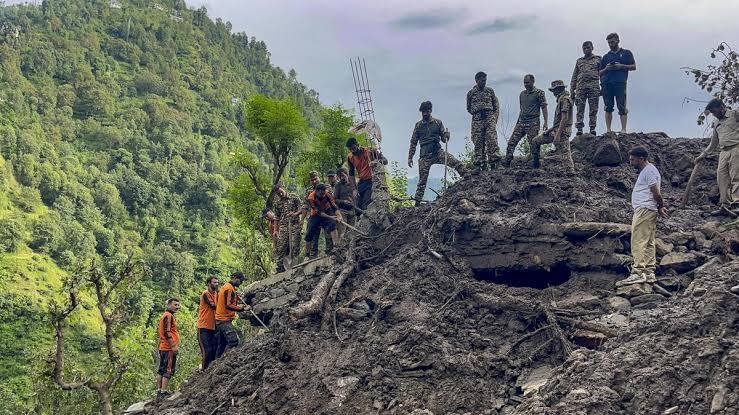
Srinagar, Aug 04: Jammu and Kashmir reported 29 human deaths, 229 cattle losses and 229 houses/huts damaged due to hydro-meteorological disasters during 2023-24, while no human deaths, cattle losses, house damage or cropped-area impact were reported from the Union Territory during 2024-25 and 2025-26, according to provisional data furnished by the Ministry of Home Affairs in the Lok Sabha.

The data was provided by Union Minister of State for Home Affairs Nityanand Rai in reply to an unstarred question raised by BJP MP Suresh Kumar Kashyap. The MP had sought details about losses caused by heavy rainfall, cloudbursts, landslides and flash floods in hilly States, including details of deaths, missing and injured persons, damaged houses, roads, bridges, agriculture, horticulture and public infrastructure, besides Central financial assistance and measures for disaster risk reduction.

As per the annexure, Jammu and Kashmir recorded 29 human lives lost, 229 cattle lost and 229 houses/huts damaged in 2023-24, with the cropped area affected shown as nil. In 2024-25, all four categories—human lives lost, cattle lost, houses/huts damaged and cropped area affected—are shown as nil. In 2025-26, J&K again recorded zero human deaths, zero cattle losses, zero houses/huts damaged and zero cropped area affected.

Ladakh, meanwhile, reported no losses under the four categories in 2023-24. During 2024-25, the UT recorded 28 human deaths, 73 cattle losses, 1,069 houses/huts damaged and 0.02 lakh hectares of cropped area affected.

During 2025-26, Ladakh reported 192 human deaths, 11,828 cattle losses, 11,864 houses/huts damaged and 0.78 lakh hectares of cropped area affected, according to the provisional figures.

The Ministry clarified that it does not centrally maintain data regarding loss of lives and property due to disasters across the country. However, the annexure contains damages reported by State Governments and Union Territories due to various hydro-meteorological disasters during the last three years, covering 2023-24 to 2025-26.

Rai said the primary responsibility for disaster management, including disbursal of relief assistance at the ground level, rests with the concerned State Governments. The States undertake relief measures through the State Disaster Response Fund (SDRF) and other available resources, while the Centre supplements their efforts with logistics and financial support. In disasters of a severe nature, additional assistance is provided from the National Disaster Response Fund (NDRF based on the recommendations of an Inter-Ministerial Central Team.

The Centre said the National Disaster Management Plan and guidelines issued by the National Disaster Management Authority cover landslides, cloudbursts, Glacial Lake Outburst Floods, forest fires and earthquakes, to which the Himalayan region is particularly vulnerable.

The government has also approved the National Landslide Risk Mitigation Project for implementation in 15 States, while the National Glacial Lake Outburst Flood Risk Mitigation Programme has been approved for Arunachal Pradesh, Himachal Pradesh, Sikkim and Uttarakhand.

An integrated SACHET warning system based on the Common Alerting Protocol has also been operationalised to disseminate geo-targeted early warnings by integrating alerts from the India Meteorological Department, Central Water Commission, Geological Survey of India, INCOIS, Defence Geo-informatics Research Establishment and Forest Survey of India.

The Ministry further said multi-disaster early-warning systems, disaster-resistant infrastructure, community preparedness and capacity building are being strengthened through initiatives including Aapda Mitra and Yuva Aapda Mitra—(KNO)

Previous Post

GoI highlights infrastructure, tourism, healthcare push for J&K, Ladakh

Next Post

Early headcount in J&K’s snow‑bound areas from Sep 1

Raja Syed Rather

Raja Syed Rather

READ MORE

GoI highlights infrastructure, tourism, healthcare push for J&K, Ladakh

by Raja Syed Rather
August 4, 2026
GoI highlights infrastructure, tourism, healthcare push for J&K, Ladakh

Srinagar, Aug 04: The Centre has highlighted a series of infrastructure, connectivity, tourism, healthcare, industrial and renewable-energy initiatives undertaken in Jammu and Kashmir and Ladakh as part of efforts to accelerate economic development...

Read moreDetails

J&K reports 3 heatstroke cases, zero deaths

by Raja Syed Rather
August 4, 2026

Srinagar, Aug 04: Jammu and Kashmir has reported three heatstroke cases but no confirmed death during the current year up to 26 July 2026, according to data furnished by the Ministry of Home...

Read moreDetails

J&K gets boost in high-density apple farming

by Raja Syed Rather
August 4, 2026
J&K gets boost in high-density apple farming

Srinagar, Aug 04: High-density apple plantation is being promoted across Jammu and Kashmir, including North Kashmir, under the High-Density Plantation (HDP) Scheme of the Holistic Agriculture Development Programme (HADP) and the Jammu and...

Read moreDetails

J&K generates 44.4 million person-days under MGNREGS

by Raja Syed Rather
August 4, 2026

Srinagar, Aug 04: Jammu and Kashmir generated 444.41 lakh person-days under the Mahatma Gandhi National Rural Employment Guarantee Scheme (MGNREGS) during 2025-26, while 49.98 lakh person-days were generated under MGNREGS and VB-G RAM...

Read moreDetails

J&K milk production rises to 2.97 MT in 2024-25 Raja Syed Rather Srinagar, Aug 04: Jammu and Kashmir’s milk production increased from 2.82 million tonnes in 2022-23 to 2.97 million tonnes in 2024-25, while per capita milk availability rose from 572 grams per day to 595 grams per day during the same period, according to data furnished by the Ministry of Fisheries, Animal Husbandry and Dairying in the Lok Sabha. The information was provided by Union Minister for Fisheries, Animal Husbandry and Dairying Rajiv Ranjan Singh alias Lalan Singh in reply to a starred question raised by BJP MP Geniben Nagaji Thakor. The MP had sought State/UT-wise details of milk production and per capita availability, schemes to increase dairy farmers’ income, expenditure incurred under such schemes, measures to strengthen dairy infrastructure and details of any proposed new schemes for animal disease prevention, quality feed and artificial insemination. As per the official data, Jammu and Kashmir recorded milk production of 2.82 million tonnes in 2022-23, 2.87 million tonnes in 2023-24 and 2.97 million tonnes in 2024-25. Its per capita milk availability stood at 572 gram/day, 577 gram/day and 595 gram/day, respectively. Ladakh, meanwhile, recorded milk production of 0.03 million tonnes in 2022-23, 0.03 million tonnes in 2023-24 and 0.02 million tonnes in 2024-25. Per capita milk availability stood at 280 gram/day in 2022-23, 267 gram/day in 2023-24 and 214 gram/day in 2024-25. The Centre said the Department of Animal Husbandry and Dairying is implementing six major schemes across the country: Rashtriya Gokul Mission (RGM), National Programme for Dairy Development (NPDD), Supporting Dairy Cooperatives and Farmer Producer Organisations engaged in dairy activities (SDCFPO), Animal Husbandry Infrastructure Development Fund (AHIDF), National Livestock Mission (NLM), and Livestock Health and Disease Control Programme (LHDCP). For Jammu and Kashmir, releases under RGM were Rs 0 crore in 2023-24, Rs 61.20 crore in 2024-25 and Rs 14.13 crore in 2025-26. Under NPDD, the releases were Rs 24.31 crore, nil and Rs 1.40 crore, respectively. Under Ladakh, RGM releases stood at nil in 2023-24, Rs 0.42 crore in 2024-25 and Rs 0.11 crore in 2025-26, while NPDD releases were nil, Rs 0.50 crore and Rs 11.58 crore, respectively. Under AHIDF, Jammu and Kashmir received Rs 0.02 crore in 2023-24, Rs 0.09 crore in 2024-25 and Rs 0.05 crore in 2025-26. Ladakh received nil in all three years. Under SDCFPO, both J&K and Ladakh recorded nil releases in each of the three years. Under LHDCP, J&K received Rs 18.85 crore in 2023-24, Rs 20.37 crore in 2024-25 and Rs 16.50 crore in 2025-26, while Ladakh received Rs 0.60 crore, Rs 2.45 crore and Rs 2.72 crore, respectively. Under NLM, J&K received Rs 1 crore in 2023-24, Rs 2.50 crore in 2024-25 and Rs 9.10 crore in 2025-26. Ladakh received nil in 2023-24, Rs 0.28 crore in 2024-25 and Rs 2.30 crore in 2025-26. The Minister said these schemes aim to improve bovine milk productivity, expand dairy cooperatives, strengthen dairy infrastructure, meet working-capital requirements, improve availability of feed and fodder and provide animal health services, thereby reducing milk production costs and enhancing dairy farmers’ income. As of June 2026, under White Revolution 2.0, 36,611 new Dairy Cooperative Societies had been organised and 34,557 existing societies strengthened at village level with NPDD financial assistance. Around 168 lakh litres per day of milk-chilling capacity had been created and 76,748 quality-testing devices distributed. Under AHIDF, projects with a total milk-processing and value-addition capacity of 418 lakh litres per day had been approved in the cooperative and private sector Singh said the ongoing schemes already cover prevention and control of animal diseases, provision of quality animal feed and expansion of artificial insemination facilities. There is therefore no proposal for a new scheme for these purposes—(KNO)

by Raja Syed Rather
August 4, 2026
J&K milk production rises to 2.97 MT in 2024-25 Raja Syed Rather Srinagar, Aug 04: Jammu and Kashmir’s milk production increased from 2.82 million tonnes in 2022-23 to 2.97 million tonnes in 2024-25, while per capita milk availability rose from 572 grams per day to 595 grams per day during the same period, according to data furnished by the Ministry of Fisheries, Animal Husbandry and Dairying in the Lok Sabha. The information was provided by Union Minister for Fisheries, Animal Husbandry and Dairying Rajiv Ranjan Singh alias Lalan Singh in reply to a starred question raised by BJP MP Geniben Nagaji Thakor. The MP had sought State/UT-wise details of milk production and per capita availability, schemes to increase dairy farmers’ income, expenditure incurred under such schemes, measures to strengthen dairy infrastructure and details of any proposed new schemes for animal disease prevention, quality feed and artificial insemination. As per the official data, Jammu and Kashmir recorded milk production of 2.82 million tonnes in 2022-23, 2.87 million tonnes in 2023-24 and 2.97 million tonnes in 2024-25. Its per capita milk availability stood at 572 gram/day, 577 gram/day and 595 gram/day, respectively. Ladakh, meanwhile, recorded milk production of 0.03 million tonnes in 2022-23, 0.03 million tonnes in 2023-24 and 0.02 million tonnes in 2024-25. Per capita milk availability stood at 280 gram/day in 2022-23, 267 gram/day in 2023-24 and 214 gram/day in 2024-25. The Centre said the Department of Animal Husbandry and Dairying is implementing six major schemes across the country: Rashtriya Gokul Mission (RGM), National Programme for Dairy Development (NPDD), Supporting Dairy Cooperatives and Farmer Producer Organisations engaged in dairy activities (SDCFPO), Animal Husbandry Infrastructure Development Fund (AHIDF), National Livestock Mission (NLM), and Livestock Health and Disease Control Programme (LHDCP). For Jammu and Kashmir, releases under RGM were Rs 0 crore in 2023-24, Rs 61.20 crore in 2024-25 and Rs 14.13 crore in 2025-26. Under NPDD, the releases were Rs 24.31 crore, nil and Rs 1.40 crore, respectively. Under Ladakh, RGM releases stood at nil in 2023-24, Rs 0.42 crore in 2024-25 and Rs 0.11 crore in 2025-26, while NPDD releases were nil, Rs 0.50 crore and Rs 11.58 crore, respectively. Under AHIDF, Jammu and Kashmir received Rs 0.02 crore in 2023-24, Rs 0.09 crore in 2024-25 and Rs 0.05 crore in 2025-26. Ladakh received nil in all three years. Under SDCFPO, both J&K and Ladakh recorded nil releases in each of the three years. Under LHDCP, J&K received Rs 18.85 crore in 2023-24, Rs 20.37 crore in 2024-25 and Rs 16.50 crore in 2025-26, while Ladakh received Rs 0.60 crore, Rs 2.45 crore and Rs 2.72 crore, respectively. Under NLM, J&K received Rs 1 crore in 2023-24, Rs 2.50 crore in 2024-25 and Rs 9.10 crore in 2025-26. Ladakh received nil in 2023-24, Rs 0.28 crore in 2024-25 and Rs 2.30 crore in 2025-26. The Minister said these schemes aim to improve bovine milk productivity, expand dairy cooperatives, strengthen dairy infrastructure, meet working-capital requirements, improve availability of feed and fodder and provide animal health services, thereby reducing milk production costs and enhancing dairy farmers’ income. As of June 2026, under White Revolution 2.0, 36,611 new Dairy Cooperative Societies had been organised and 34,557 existing societies strengthened at village level with NPDD financial assistance. Around 168 lakh litres per day of milk-chilling capacity had been created and 76,748 quality-testing devices distributed. Under AHIDF, projects with a total milk-processing and value-addition capacity of 418 lakh litres per day had been approved in the cooperative and private sector Singh said the ongoing schemes already cover prevention and control of animal diseases, provision of quality animal feed and expansion of artificial insemination facilities. There is therefore no proposal for a new scheme for these purposes—(KNO)

Srinagar, Aug 04: Jammu and Kashmir’s milk production increased from 2.82 million tonnes in 2022-23 to 2.97 million tonnes in 2024-25, while per capita milk availability rose from 572 grams per day to...

Read moreDetails

From The Parliament : J&K reports 6 fatal factory injuries in 2022-23

by Raja Syed Rather
August 4, 2026
From The Parliament : J&K reports 6 fatal factory injuries in 2022-23

Srinagar, Aug 03: Jammu and Kashmir reported six fatal and 87 non-fatal injuries in registered factories during 2022 and 2023, while data for 2024 was not reported by the Union Territory, according to...

Read moreDetails

J&K registers 5,908 new small companies in 5 years

by Raja Syed Rather
August 4, 2026
J&K registers 5,908 new small companies in 5 years

Srinagar, Aug 03: Jammu and Kashmir registered 5,908 small companies during the last five financial years, including 1,558 in 2025-26, the Ministry of Corporate Affairs informed the Lok Sabha on Monday. J&K registered...

Read moreDetails

Leave a Reply Cancel reply

Your email address will not be published. Required fields are marked *

© 2025 Kashmir Thunder - Designed by K.Web.

No Result
View All Result
  • HOME
  • News
    • Top Headlines
    • Local
    • National
    • World
  • Business
  • Science & Tech
  • Education
  • Health
  • Opinion
    • Editorial
    • Feature
    • Review
  • Sports
    • Cricket
    • Football
    • Others
  • EPAPER

© 2025 Kashmir Thunder - Designed by K.Web.