
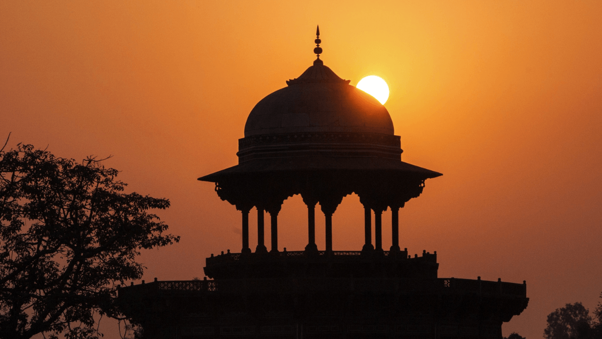
Safar is the second month of the Islamic lunar calendar. Like every month in the Islamic calendar, it carries significance as part of the passage of time Allah has created. Yet Safar has also been surrounded by beliefs and superstitions that Islam does not support.
For Muslims, understanding Safar means separating authentic Islamic teachings from cultural traditions and remembering that our faith is built upon the Qur’an and the authentic Sunnah.
What Is Safar?
Safar follows Muharram, one of the four sacred months of the Islamic calendar. Unlike Muharram, however, Safar is not a sacred month.
The Islamic calendar is based on the lunar cycle, meaning Safar moves through the seasons over the years. Its name comes from the Arabic word sifr, commonly associated with emptiness or being vacant. Some classical explanations connect the name to the departure of people from their homes for travel or to the emptying of homes when people left for journeys.
The month itself is neither inherently lucky nor unlucky.
Is Safar an Unlucky Month?
One of the most important misconceptions surrounding Safar is the belief that it is a month of bad luck, misfortune, illness, accidents, or calamities.
Islam rejects this idea.
The Prophet Muhammad (SAW) explicitly rejected beliefs in supernatural omens and bad luck. In an authentic hadith, the Prophet (SAW) said: “There is no ‘Adwa, no Tiyarah, no Hāmah, and no Safar.” Sahih al-Bukhari and Sahih Muslim
The reference to Safar has traditionally been understood by scholars as rejecting the pre-Islamic belief that Safar itself brought misfortune.
This is an important principle in Islam: time itself does not independently cause harm or bring good fortune. Everything occurs by Allah’s decree.
Allah says: “Say, ‘Nothing will ever befall us except what Allah has destined for us.'” – Qur’an 9:51
This does not mean Muslims should ignore genuine causes of harm. Rather, it means that believers should not attribute supernatural power to a particular month, day, number, or omen without evidence from revelation.
What About the “Last Wednesday of Safar”?
In some cultures, the final Wednesday of Safar has been associated with misfortune or calamity. Some people have also believed that this day carries particular dangers or that special acts of worship should be performed to protect oneself.
There is no authentic evidence from the Qur’an or Sunnah establishing the last Wednesday of Safar as a day of special misfortune.
Likewise, there is no authentic Islamic teaching prescribing a special prayer, fast, gathering, or particular ritual specifically because it is the last Wednesday of Safar.
Muslims should therefore be careful not to turn cultural practices or inherited beliefs into religious obligations or acts of worship without evidence.
Should Muslims Avoid Important Events During Safar?
There is no Islamic basis for avoiding marriage, travel, business, moving homes, starting a project, or other permissible activities simply because it is Safar.
A person may naturally choose a particular date because of practical circumstances, but believing that Safar itself makes an activity more likely to fail has no basis in Islamic revelation.
The Prophet (SAW) taught Muslims to reject superstitious omens and instead place their trust in Allah.
This does not mean being careless. Muslims should plan, seek advice, take reasonable precautions, and make decisions wisely. But they should not allow superstition to control their lives.
Safar and the Prophet (SAW)
Another misconception concerns the idea that the Prophet Muhammad (SAW) experienced a specific recurring tragedy every year during Safar.
There is no authentic evidence establishing Safar as a month in which the Prophet (SAW) or the Muslim community was destined to experience particular misfortunes.
The Prophet (SAW) himself lived through hardship, illness, loss, conflict, and difficulty at different points in his life. These events remind believers that hardship is part of the human experience-not something caused by a particular month.
Allah says: “We will certainly test you with something of fear and hunger and a loss of wealth and lives and fruits. And give good news to those who patiently endure.” – Qur’an 2:155
How Should We Spend Safar?
The answer is simple: as we should spend every month-with faith, worship, good character, and awareness of Allah.
There is no special set of acts of worship uniquely prescribed for Safar. Instead, Muslims can use the month as another opportunity to strengthen their relationship with Allah.
That can include:
Maintaining the five daily prayers
Reading and reflecting upon the Qur’an
Making abundant du’a and dhikr
Giving charity
Honoring parents and family
Helping those in need
Seeking beneficial knowledge
Repenting from sins
Strengthening good character
Sending blessings upon the Prophet (SAW)
The goal is not to fear Safar, but to use every passing month as an opportunity to draw closer to Allah.
A Month That Teaches Us About Tawakkul
Perhaps one of the greatest lessons of Safar is the importance of tawakkul-placing one’s trust in Allah.
Superstition often comes from fear of what cannot be controlled: What if something goes wrong because it is Safar? What if this date brings bad luck? What if something terrible happens?
Islam redirects that fear toward Allah.
A believer understands that the future belongs to Allah. We take the means available to us, make responsible decisions, and then place our trust in Him.
The Prophet (SAW) taught: “Know that if the entire creation were to gather together to benefit you with something, they would not benefit you except with something that Allah had already prescribed for you…” Jami’ at-Tirmidhi
This mindset frees a believer from constantly looking for omens.
Safar Is Not a Month to Fear
Safar is simply another month in the Islamic calendar.
It does not carry an inherent curse. It does not make people unlucky. It does not prevent marriages, journeys, businesses, or other permissible activities. And there is no authentic basis for assigning special religious rituals to it without evidence.
For Muslims, the arrival of Safar should therefore not produce fear or superstition. Instead, it can serve as a reminder of one of Islam’s most powerful teachings:
Our lives are not controlled by omens. They are in the hands of Allah.
As another lunar month begins and passes, the believer’s task remains the same: worship Allah, follow the guidance of His Messenger (SAW), take the proper means, avoid superstition, and place sincere trust in the One who controls all affairs.
“And whoever relies upon Allah-then He is sufficient for him.” – Qur’an 65:3
Safar is not a month of bad luck.
It is simply another month-and another opportunity to turn toward Allah.
Courtesy: IslamiCity