
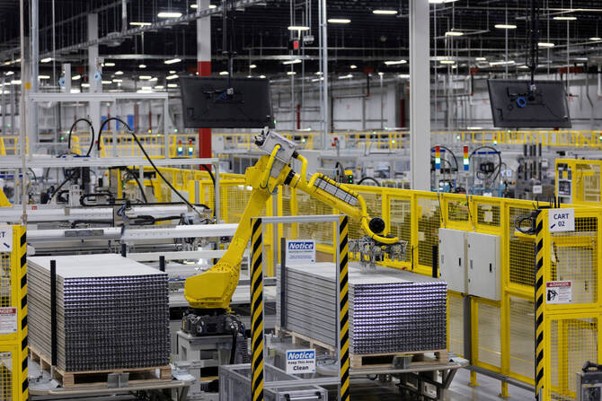
Many large firms are still running pilots and postponing hiring or firing decisions as they await more clarity
Artificial intelligence-related job displacement is coming, though no one knows how fast it will proceed, how far it will go, and which sectors it will affect most. Much depends on the pace at which individual firms apply the technology to their operations. A recent US Census Bureau Business Trends and Outlook Survey indicates that only 20 percent of firms with fewer than 20 employees currently use AI, compared to 37 percent of businesses with at least 250 employees. While larger firms are doing more with the technology, 37 percent is still quite meager considering the survey’s low threshold for answering in the affirmative (whether AI is used “in any business function”).
For now, adoption is being impeded by the difficulty of integrating already astonishing AI capabilities into existing workflows in a way that will allow companies to reap the benefits fully. Doing so requires models that are not only trained on existing data but also adaptive to new data generated through everyday use. Another factor inhibiting adoption is uncertainty about cost. Many large firms are still running pilots and postponing hiring or firing decisions as they await more clarity. Eventually, however, competitive pressures will force them to adopt the technology more fully.
The outlook for jobs is not entirely pessimistic. If companies continue producing the goods and services they currently produce, AI adoption will have the effect that any new technology has. Yes, some jobs will be rendered redundant (implying displacement); but some jobs will be made more productive and exciting as AI removes drudgery and assists with tasks humans do less well, and new jobs will be created (such as AI engineers who supervise the technology’s implementation).
Moreover, if AI adoption occurs because of the productivity increases it brings (rather than because it costs less in taxes than human effort), firms’ ability to produce more for less will allow them to reduce prices and increase sales. This is the famous Jevons effect, which should also increase the number of jobs.
Yet another reason for optimism is that AI may help create new businesses. Jill might hesitate to become an entrepreneur selling driftwood furniture pieces because she also needs a web programmer and an accountant to start up. With AI performing both those roles, perhaps she can set up a sole proprietorship at significantly less cost. The number of startups increased significantly during the pandemic and has increased further in recent quarters.
As the economist David Autor points out, AI can also equip moderately skilled workers with higher-order skills, as in the case of a nurse practitioner who can diagnose and treat many more illnesses with the help of medical AI. Given the enormous demand for medical services worldwide, and also services more generally, there is plenty of room for further job creation.
But even if the jobocalypse is less severe than many feared, minimizing its effects is still necessary to maintain social solidarity, and corporations will need to be enlisted in the effort. After all, it is they who will have the best sense of the new opportunities that their employees can re-train for. The first task for any government, then, is to identify and address all the ways the tax system biases corporations against human labor. For example, a US firm contributes social security payments for every worker, but not for AI.
In a world where governments are already cash-strapped, one way to level the playing field is to levy a tax on the AI tokens a firm uses. The precise tax rate will need to be calculated carefully to avoid impeding AI deployment, but it can be set low initially and then gradually raised with experience. While payments to domestic AI providers can be tracked easily, foreign providers would also have to be brought into the net; but this is not an insoluble problem.
Recognizing that the first round of AI displacement will not be the last, it will be even more valuable to get firms to re-train workers periodically, and to retain workers whenever possible. Perhaps governments could consider a tax credit for additional training provided to workers, with one-third of the value usable each year a worker retains employment (and not necessarily with the firm that provided the latest training). If the government wants to apply such a policy to AI adopters, it could even require the credit to be used only to offset the token tax.
More important than tax incentives, however, will be firms’ acknowledgement that they are fully engaged in helping their employees cope with an uncertain future. As employment uncertainty grows, even the best and brightest may worry about accepting offers from an employer who could fire them whenever it finds that AI can do as well or better. Employers who promise to support their employees may ultimately enjoy an additional bonus: As their reputation grows, they will have a wider pool of high-quality candidates to choose from.
The trend here is encouraging. In ongoing work, Luigi Zingales, Pietro Ramella, and I find that the share of US Fortune 150 CEOs declaring in their letters to shareholders that they care about employee development which increased steadily, from around 20 percent in 2008 to 44 percent in 2023. We cannot rule out the possibility that this is all cheap talk. One hopes not. The more that corporations engage in what may be the defining business challenge of our time — providing good jobs for humans — the more we can all look forward to a future of plenty.
Raghuram G. Rajan, a former governor of the Reserve Bank of India and chief economist of the International Monetary Fund, is professor of finance at the University of Chicago Booth School of Business.
Courtesy: Project Syndicate