Deliberates on child mental health, ethics, law
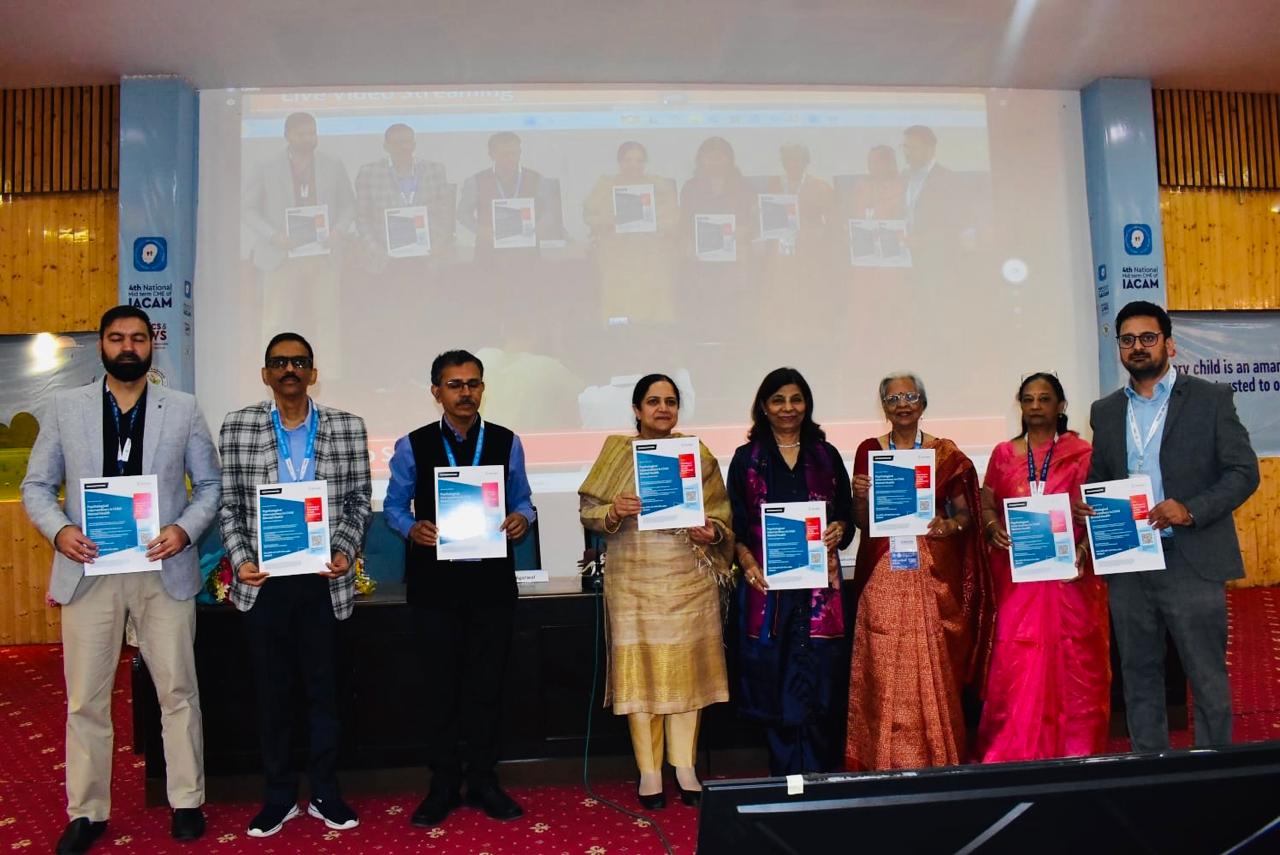
SRINAGAR, SEPTEMBER 28: The 4th National Mid-Term CME of the Indian Association for Child and Adolescent Mental Health (IACAM) concluded in Srinagar on Sunday after three days of discussions on the ethical, legal and clinical dimensions of child and adolescent mental healthcare.
Held from September 25 to 27, the CME was organised by IACAM in collaboration with the Jammu & Kashmir Psychiatric Society (JKPS). The programme, themed “Children, Ethics and Laws”, brought together psychiatrists, psychologists, paediatricians, legal professionals, researchers and other mental-health practitioners from across the country.
The conference, as per an official statement, was inaugurated by Dr Iffat Hassan Shah, Principal/Dean Government Medical College, Srinagar, who attended the conference as Chief Guest.
Addressing the gathering, Dr Shah highlighted the expansion of mental-health services in Kashmir and acknowledged the sustained efforts of professionals working in the field.
Dr Savita Malhotra, Life President of IACAM, stressed the need to train and deploy more mental-health professionals to meet the growing psychological and developmental needs of children and adolescents.
Dr Vivek Agarwal, President, IACAM, and Dr Rachana Bhargava, General Secretary, IACAM, underlined the importance of integrating ethical and legal considerations into child and adolescent mental-health practice. They emphasised that such an approach is essential for ensuring responsible, rights-based and child-centred care.
The scientific programme examined the relationship between mental healthcare, child rights and the legal framework governing children and young people. Sessions addressed ethical dilemmas in clinical practice, legal issues involving children, mental-health assessments, child protection, developmental concerns and the responsibilities of professionals working with young people.
The CME featured lectures, interactive workshops, panel discussions and academic exchanges. Across the sessions, speakers emphasised that children should be recognised not only as recipients of care but also as individuals with rights, voices, vulnerabilities and evolving capacities.
The programme included contributions from several distinguished experts and academicians, including Dr Shekhar Seshadri, whose work in child and adolescent mental health, ethics and child rights has influenced professional practice and training in the field. Clinicians, academicians and experts from diverse disciplines also participated in the scientific deliberations.
A Panel Discussion on ‘From chalkboards to chatbots ‘ deliberated on the growing role of Artificial Intelligence (AI) and chatbots in education and human interaction. The speakers discussed the potential of AI to support more equitable and individualised learning while also examining concerns relating to critical thinking, creativity, human interaction and the changing nature of communication and social relationships.
The discussion noted that AI is emerging as a significant technological development with far-reaching implications for education and society. Speakers emphasised the need to engage with the technology responsibly, while ensuring that human creativity, critical thinking, social interaction and independent learning remain central to education and human development.
The organisers called for evidence-based, ethical, compassionate and rights-based mental healthcare for children and adolescents. They noted that addressing child and adolescent mental health as a public-health priority would require sustained cooperation among professionals, families, schools, healthcare institutions, policymakers and legal authorities.
The conference also highlighted Jammu & Kashmir’s growing role in academic and professional engagement in mental health and strengthened links between practitioners in the region and colleagues from across India.
The gathering concluded with a renewed commitment to developing accessible, ethical and child-centred mental-health systems that place the dignity, voice and best interests of every child at the centre of clinical practice, policy and law.