All 55 pesticides screened below quantification level, says VC Prof Ganai
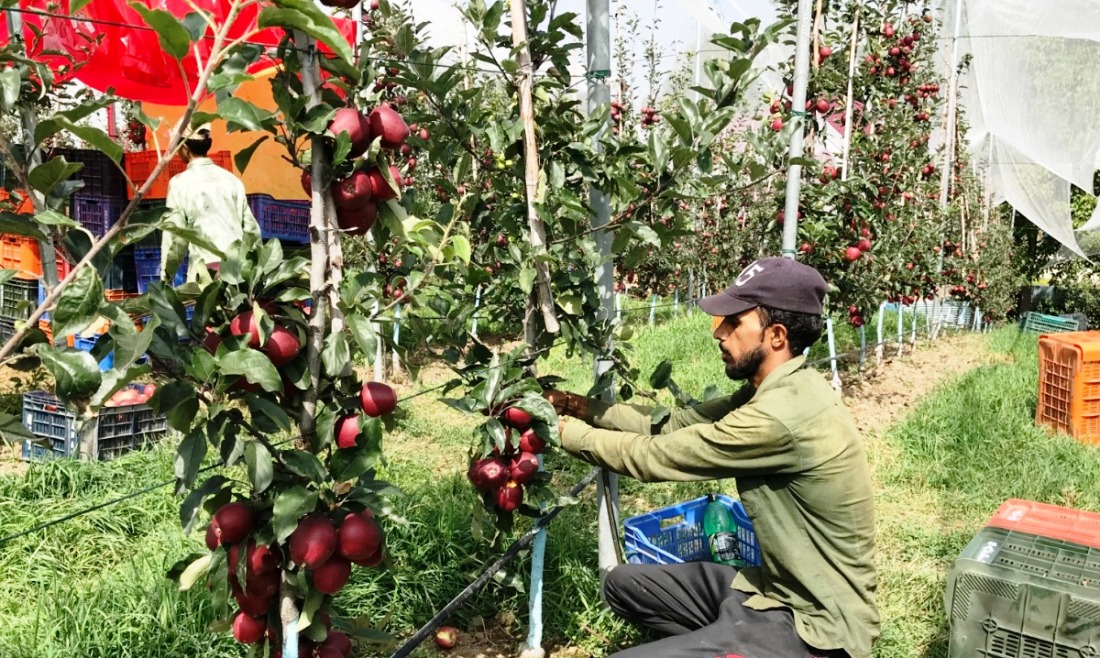
Srinagar, Oct 09: Sher-e-Kashmir University of Agricultural Sciences and Technology of Kashmir (SKUAST-K) has harvested pesticide-free apples in Kashmir for the first time, with laboratory testing showing all 55 pesticides screened were below the quantification level, Vice-Chancellor Prof Nazir Ahmad Ganai said on Friday.
Speaking at a seminar on natural farming organised by SKUAST-K in collaboration with the Bharatiya Kisan Sangh and the Kisan Advisory Board, J&K, at Shalimar, Ganai, as per the news agency—Kashmir News Observer (KNO), said the university is promoting natural and organic farming to reduce dependence on chemical pesticides and protect soil, water, biodiversity and human health.
“We have harvested a pesticide-free apple for the first time in Kashmir. We tested the apples for 55 pesticides, and all 55 were found to be below the quantification level,” he said.
Ganai said intensive agricultural practices and excessive use of chemicals and pesticides were adversely affecting the environment, soil, water and air, besides contributing to biodiversity loss.
“Ultimately, it has a bad effect on human health. We can see that the incidence of cancer is increasing. We need to focus on natural farming and organic agriculture,” he said.
He said SKUAST-K had established a Centre of Excellence in Natural Farming and a major organic farming centre equipped with an industrial-scale bio-input production facility.
“We have a big incubation facility where we are teaching youth and farmers of Kashmir how to produce bio-fertilisers, bio-controls and bio-input agents on a large scale and how to deploy them,” Ganai said.
He said these initiatives would help reduce the use of chemical pesticides and promote environmentally sustainable agricultural practices.
Ganai said the university was working with farmers, the government and agricultural experts to create awareness across Jammu and Kashmir about sustainable farming methods.
He also highlighted SKUAST-K’s One Health programme, under which environmental, agricultural, animal and human health are addressed together. (KNO)