Srinagar, Oct 24: Even as India continues to maintain its polio-free status, health experts have cautioned that the threat of the crippling disease persists due to the continued circulation of poliovirus in neighbouring countries, stressing the need for sustained vaccination coverage, effective surveillance and improved sanitation.
On the occasion of World Polio Day, observed annually on October 24, doctors said that maintaining high immunisation coverage among children remains crucial to preventing the reintroduction of the virus, which can cause irreversible paralysis and, in severe cases, death.
India was declared polio-free in 2014, marking a major milestone in its public health efforts. However, doctors said the country cannot afford to become complacent as the virus continues to circulate in some parts of the world, leaving the possibility of imported infections.
They said poliomyelitis, commonly known as polio, is a highly contagious viral disease that primarily affects children under five years of age. The virus can invade the nervous system and cause permanent paralysis within hours in severe cases.
“Polio is a highly infectious disease caused by the poliovirus. It spreads mainly through the faecal-oral route, particularly when a person consumes food or water contaminated with the faeces of an infected individual. The virus can spread rapidly in communities where sanitation and hygiene practices are inadequate,” doctors said.
Dr Ab Rashid Bhat, a doctor at the Directorate of Health Services Kashmir (DHSK) that even a single confirmed case of polio can trigger serious public health concerns, making continuous surveillance and vaccination essential. He said the poliovirus multiplies in the intestine and is subsequently shed through faeces, potentially contaminating the surrounding environment and exposing others to infection.
“Poor hygiene, unsafe drinking water and a lack of proper sanitation facilities create favourable conditions for the transmission of the virus. Children below five years are particularly vulnerable, which makes ensuring complete immunisation coverage among this age group extremely important,” he said.
Doctors said polio infection can range from an illness without noticeable symptoms to severe neurological complications. In many cases, infected individuals do not develop symptoms but can still transmit the virus, making detection and prevention challenging. When symptoms appear, they may include fever, fatigue, headache, vomiting, neck stiffness and pain in the limbs. In severe cases, the virus attacks the nervous system and can cause acute flaccid paralysis, resulting in permanent disability.
Dr Fayaz Ahmad Shah said the consequences of polio can extend throughout a person’s life, even after the initial infection has passed. “Many polio survivors continue to experience long-term complications, including muscle weakness, limb deformities and difficulties in walking or performing routine activities,” he said.
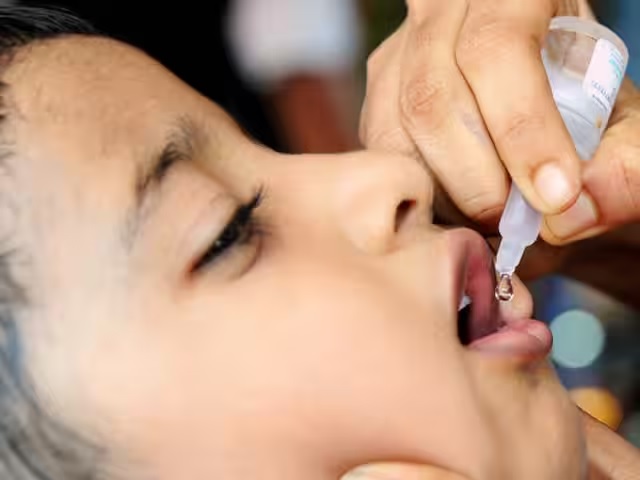
Doctors stressed that vaccination remains the most effective means of preventing polio. They said two types of vaccines are widely used — the Oral Polio Vaccine, administered as drops, and the Inactivated Polio Vaccine, given through an injection. The oral vaccine plays an important role in interrupting transmission and building intestinal immunity, while the injectable vaccine stimulates protective antibodies in the blood.
Health experts said children must receive all recommended doses according to the national immunisation schedule, adding that parents should not overlook routine vaccination or supplementary doses administered during special immunisation campaigns. They warned that India’s polio-free status should not be mistaken for the complete elimination of the risk, particularly when poliovirus continues to circulate internationally.
“Although India has remained polio-free for years, the threat of importation cannot be ignored as long as the virus continues to circulate elsewhere. Sustained immunisation drives, effective disease surveillance and public awareness are essential to protecting the gains achieved through years of dedicated efforts,” doctors said.
They stressed that the responsibility for preventing polio extends beyond health authorities, with parents, teachers, community leaders and frontline health workers all having an important role in ensuring that every eligible child is vaccinated. They also called for greater awareness about personal hygiene, safe drinking water and proper sanitation.
“Polio is a vaccine-preventable disease, but its consequences can be permanent and devastating. Continued vigilance, complete immunisation, effective surveillance and improved sanitation are essential to ensuring that the disease does not return,” they added—(KNO)